
Articles to read, Human Rights Features

Nepal: Reality check behind the Euphoria

Nepal should prioritize fostering genuine inner-party democracy within existing political parties to develop capable mid-level leadership while maintaining equidistance from Hindutva and external powers to preserve its sovereignty and democratic institutions.
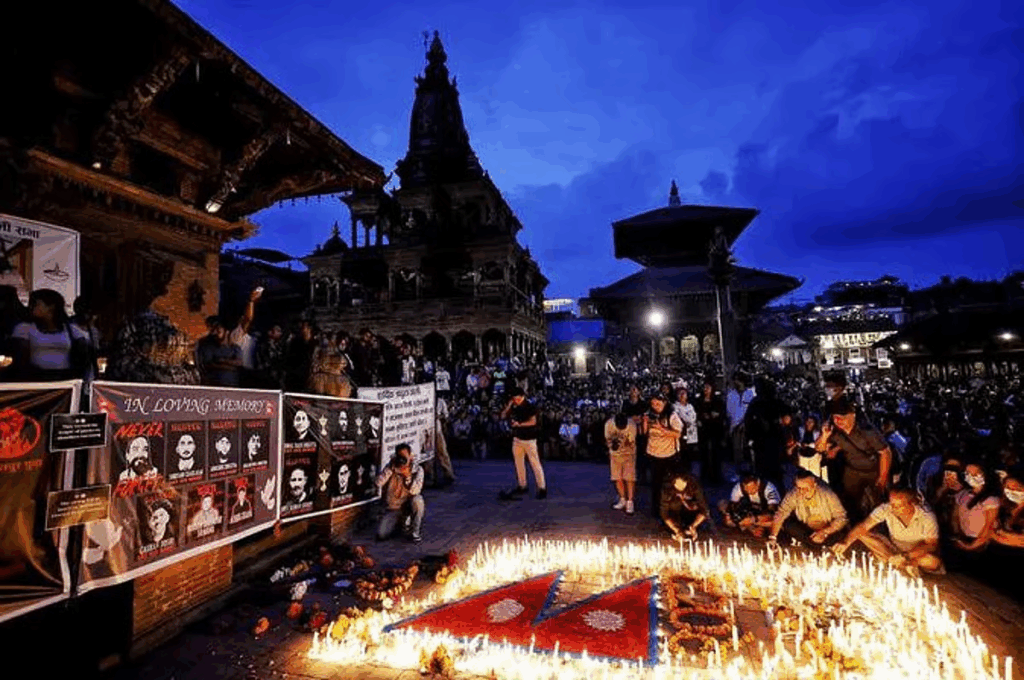
People paying homage to those who were killed in Nepal protests in September 2025. Photo/nepalitimes.com

Sushila Karki sworn-in as interim Prime Minister of Nepal wears a crown of thorns. Tasked to hold parliamentary elections within a period of six months, her initial steps are in the right direction. Good cabinet choices, the announcement of reparation, and the announcement of investigation into the killings of protesters.

A former Chief Justice of Nepal for just a year, she has rich legal experience. While being non-partisan for over three decades, she understands Nepal’s politics unlike most judges of superior courts in many common law countries, including India.

She is incorruptible and a strong-willed individual. The second attribute in the nebulous situation that is Nepal currently can have both useful and difficult dimensions. Like all democracies with weak civilian institutional frameworks, the end game of political control is wily negotiation on a range of issues, most importantly, the loaves of office. Not being part of the gravy train, she will have her task cut out, negotiating with biped bandicoots of all hues.

Public good is the attainment of the holy grail in her case and that of her new cabinet colleagues. Not necessarily shared by those who were shown the door and want it at best to be a revolving door!

Having no cadres of her own, but disparate youth groups, who while being effervescent presently, will in time disappear like the bubbles of protest they created. Some will attempt to create political vehicles of their own while many in due course will become part of the existent political machines they now decry. Others, giving themselves inflated importance, will, to put it mildly, not be helpful.

The duopoly of authoritarians, KP Oli and Sher Bahadur Deuba, both within their respective political machines, had little in common but remaining in office and power. They are out for the count on this round, but the results of the bout are a long way off. The Maoists under Prachanda also want a seat at the high table, though large sections of their cadre seem to have seen through him and his shenanigans. Writing him off would be a mistake. If nothing else, he has immense manipulative skills.

Karki will be expected to show political and administrative results across the board in too many areas in a time frame that will be daunting even for a consummate magician. Even a modicum of administrative reforms to tackle ingrained bureaucratic sloth and petty corruption, which the average citizen faces daily, will be difficult. Having no trained political cadres and without them looking over the shoulders in every one of the 77 Chief District Officer (CDO) offices in Nepal, reform is easier said than done!

The myth of Youth revolution-Pies in the sky!

Too much has been made of the youth revolution. That they were undeniably the catalyst is a no-brainer. They certainly are part of the reformation of Nepal, not the only ones. Widespread alienation of all sections of society from the organs of governance was tinder waiting for a spark.

A reading of the 18th Brumaire is instructive. There are too many parallels between contemporary social discontent and the advent of authoritarian populism in too many countries to ignore.

France 1968 influenced “cultural and political landscapes beyond France. It opened the way for new areas of social emancipation, including feminism, ecology, and gay rights.” As for real political change, c’est la vieThis is how it is.

Lest we forget, massive mobilisation of the youth notwithstanding, the movement failed to overthrow the government or enact a transformation of society. President Charles de Gaulle dissolved the National Assembly, called for new elections, in which his party won a landslide victory, effectively ending the youth upsurge.

The Arab Spring

This is the best fairy tale that emanated from the region since the genie came out from the lamp. In Tunisia, it is back to being what it does best: being a dictatorship. Apart from its cohabitation with ultra-right-wing Israel, Egypt just made sure its democratically elected leader died in prisonJordan will be Hashemite till they obey the diktat of the Golani brigade. No Zia ul Haq and his Arbid brigade presently to mow down Palestinians. Bahrain is secure as the causeway allows Saudi tanks to crush popular unrest. Libya, Yemen and Syria had consequences for all to see.

South Asia youth ferment and consequences

Bangladesh

FALGOON’ and CHAITRA are good months both in the Bengali and Nepali Calendar to visit either of the countries. The elections in both countries will hopefully have concluded, relatively peaceful.

Short of divine or other intervention, the Bangladesh Nationalist Party (BNP) and the Bangladesh Jamaat-e-Islami will be the main contenders, with the BNP clearly having the edge. The newly created party that represents a major section of the students that propelled the ouster of Sheikh Hasina will at best be the third, as the Awami League is not in the running. And an unreformed notorious Directorate General of Armed Forces Intelligence (DGBFI) waits in the wings, its talons sheathed for the moment.

Sri Lanka

The JVP has been the best-organized political party in Sri Lanka. It is no surprise that they rode the Aragalaya protests to electoral success. The creation of the National Peoples Power coalition was nothing short of genius. The Colombo elite personified by Ranil Wickremasinghe were shown the door. Anura Dissanayake has been cautious and astute so far in both domestic and regional politics. His only Achilles heel is the issues relating to the 13th amendment to the Sri Lankan constitution. But that is some way off as there is no overarching leadership in the Sri Lankan Tamil community. It is perhaps the only movement in this part of the globe recently that peacefully toppled the old, ossified elite and carpetbaggers of the clan, Rajapakse.

The choices in Nepal

The Hindutva crowd and Monarchists

They feed on each other just as mice in their filial cannibalism. Their support is presently marginal. Like the Tamil Hindu in India, the average Hindu Nepali can be observant to a fault but is not willing to exchange his or her hard-won democratic freedoms to saffron mendicants who promise them moksha or nirvana in only the afterlife.

It is the abject failure of the parties of the left and the secular Nepali Congress that has given space to those who have little respect for Nepal’s sovereignty. While the wannabe monarch, the beneficiary of a familicide that has yet to see proper investigation, certainly has the capacity to create mayhem. Not only was the lumpen able to storm Nakhu jail and free pro-royalists, but much of the burning and looting, not surprisingly, did not touch the palatial properties of the erstwhile royalty and its courtiers.

The good Nepali Hindu should realise that an embrace of Hindutva brings in its wake the tentacles of Akhand Hindutva India. A pipe dream of the saffron brigade which wants all the present SAARC countries with the exception of Afghanistan but the inclusion of Myanmar in their mythical Aryavart.

The CPN (UML), the Nepali Congress, the CPN (Maoist) all have gerontocratic leadership, which have clearly learnt nothing, as evidenced by their joint statement lamenting the dissolution of Parliament. Would they have been better off with a Nepali Cromwell yelling, “In the name of God, go“?

All of them have capable midlevel and grassroots leadership. The sooner all of them show greater inner party democracy, the better the prospects for parliamentary democracy in Nepal.

In the wings-India-China-USA

For the conspiracy theorists, it must be a dampener that India, the USA, and China have all recognized the legitimacy of the interim government under Karki. This is not to deny that all of them have been fishing in the Koshi and Gandaki river systems. If all of them let their nets and rods be for a while, it will help the Nepali people reiterate their own agency.

The Europeans and the Scandinavians have also not been innocent bystanders. Their ill-advised support to causes that do not befit a sovereign Nepal is legion. They would all help Nepal if they strengthen delivery mechanisms like the offices of the Chief District Officer, which have little resources, are understaffed and office equipment is better on display in museums.

Civil Society in Nepal, as elsewhere in Asia, needs to remember “beware of Greeks bearing gifts”.

To cite only instance, all the fiercely anticommunist donors have been funders of both the Marxist and Maoist influenced civil society organizations! And of course, the name of the game is “color revolution” for those who don pinko red to crimson red!

And not forget that the Army is nearby in Bhadrakali Marg.

The issues in Nepal are too many to enumerate here. Suffice to say, that the Nepalis did not do too badly without colonial interlopers and can do so again with a sagacious national leadership at all levels.
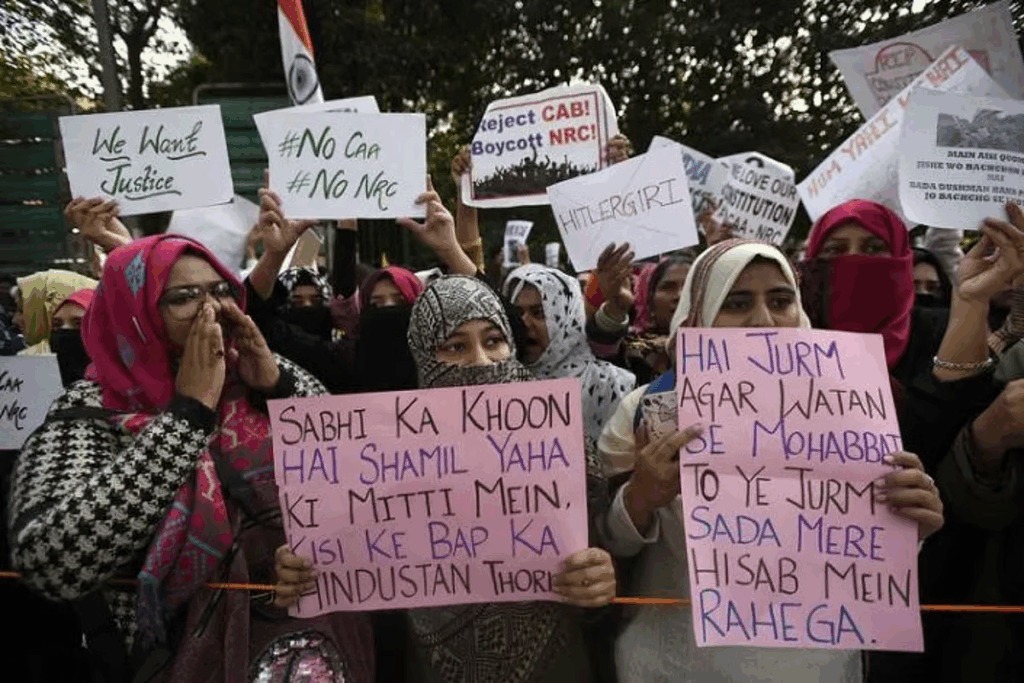
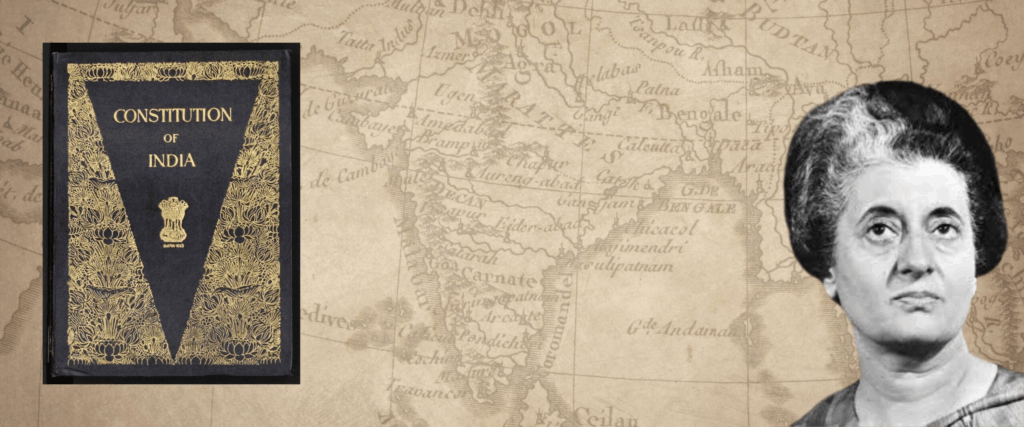
Nepal’s Political Reality: Sushila Karki’s Daunting Task

2025, Articles to read

The Hindutva agenda: The Electoral rolls gambit

Instead of hollowing out Universal Adult Franchise which enriches democracy, can be undermined by mass disfranchisement of those entitled to vote.

Hindutva Agenda on electoral politics in India. Image is representational.Photo/twailr.com

Universal Adult Franchise in the aftermath of an impartially conducted census in tandem with a caste census will sound the death knell of continued upper caste supremacy, and the politics of religious majoritarianism in India. It is little wonder that the census has not taken place since 2011.

Data on caste was not available since the 1931 census. The UPA government initiated the Socio Economic and Caste Census (SECC) in 2011. Specific data on caste was not released. Observe the difficulties of the Congress governments in Karnataka and Telangana and the NDA government in Bihar.

General elections taking place without the freezing of a fresh delimitation of constituencies until the concerns of the Southern states are addressed would be stimulus for those giving vent to feelings not confined to greater autonomy.

A frontal attack on adult franchise would be folly even for the supercilious amongst the twice born and the well-heeled. In the wake of the Mandal Commission report, it is difficult to stop the inching towards a more socially equitable society for long.

Even the Rashtriya Swayamsevak Sangh (RSS) in September 2024 indicated its “support for a Caste Census, while adding that it should not be used for political or electoral purposes.”

The Genesis

Adult franchise was always seen as a threat to the upper castes and the propertied classes. Dr B R Ambedkar had argued that it be part of the fundamental rights chapter but Sardar Vallabhbhai Patel was not amenable to this as Chairperson of the Advisory Committee.

Many important Congress men like Mosalikanti Thirumala Rao opposed universal adult franchise. Brajeshwar Prasad argued, universal adult franchise as a ‘violation of the tenets of democracy’. Even social democrat, K.T. Shah and liberal Hridhay Nath Kunzru were not enthused by the prospect of universal adult suffrage, albeit on the grounds of literacy. Krishna Chandra Sharma and a few other Congress men supported it.

When the Constituent Assembly adopted the principle of universal adult franchise, Alladi Krishnaswami Iyer, a member, remarked that this was done, “with an abundant faith in the common man and the ultimate success of democratic rule, and in the full belief that the introduction of democratic government on the basis of adult suffrage will bring enlightenment and promote the well-being, the standard of life, the comfort, and the decent living of the common man”

The lone Communist member of the Constituent Assembly, Somnath Lahiri wanted proportional representation in addition to universal adult franchise. As for Hindutva supporters, the constitution itself was not acceptable.

The Mandal commission report resurrected the need for caste-based apportioning of the development cake. Since then, it has been a protracted rearguard battle by much of the state machinery on behalf of the socially and economically haves who want to be perpetual haves.

Judicial Insouciance

India is in real danger of slipping into Hindutva majoritarianism. It will be no small measure due to judicial attitudes on many key issues related to the continuance of representative democracy in India.  The most recent of which is the inordinate delay in deciding the challenges to Constitution Bench judgment in Anoop Baranwal v. Union of India (2023).

In Anoop Baranwal, the Constitution Bench analysed Article 324 of the Constitution dealing with the appointment of Election Commissioners. It spoke of the need to take the appointment “out of the exclusive hands of the executive.

It said that “a pliable ECI, an unfair and biased overseer of the foundational exercise of adult franchise, which lies at the heart of democracy, who obliges the powers that be, perhaps offers the surest gateway to acquisition and retention of power”.

The Court was assertive when it said that “the outpouring of demands for an impartial mode of appointment of the members require, at the least, the banishing of the impression that the ECI is appointed by less than fair means.”

As Senior Advocate, Kaleeswaram Raj, further succinctly puts it:

“The Modi regime promulgated the Chief Election Commissioner and Other Election Commissioners (Appointment, Conditions of Service and Term of Office) Act in 2023 with a view to nullify the Constitution Bench judgment in Anoop Baranwal v. Union of India (2023). The Act excluded the Chief Justice of India (CJI) and included a Cabinet Minister to be nominated by the Prime Minister in his place, as part of the Selection Committee for choosing the Election Commission of India (ECI). This statute was legally challenged in several writ petitions which are yet to be finally heard. Significantly, the petitioners also sought a stay of the enactment. A Bench, led by Justice Sanjiv Khanna (as he then was), heard the application for a stay and rejected it on March 22, 2024, by a detailed order in Dr. Jaya Thakur and others v. Union of India (2024). Had the statute been stayed, the country could have had a different umpire for the 2024 Lok Sabha elections and the subsequent Assembly elections. In all probability, a more independent ECI could have had the potential to conduct the elections more fairly and impartially. That this did not happen shows the Supreme Court’s failure to act at a time when it was supposed.”

The Hindutva judgement of 1995 of the Supreme Court opened the floodgates for ultra-nationalism.  This was followed by the Manohar Joshi petition. The gates of secularism had been breached.

The Election Commission of India

One of the great popular myths in India popularized by the corporate owned media was that the arrival of T.N. Seshan gave the Election Commission of India its gravitas. Few remember Sukumar Sen who in an age where technology was non-existent in the electoral process not only got it up and running but did a splendid job. 

T Swaminathan, a former ICS officer who conducted the historic March 1977 election got no kudos for it. Self-effacing, he drove out into the sunset. Few remember the then iconic poster in all the official languages across India. “Vote without fear, your vote is secret.” It made a difference.  Small but important.

J M Lyngdoh will be remembered for being a good helmsman on Gujarat during 2002 and dealing with the fulminations of then Chief Minister, Narendra Modi, with a rare dignity.

Seshan was the quintessential civil servant who finds his or her enlightenment only after retirement. He was then a young Collector in Madurai. Kodaikanal, fell within his jurisdiction. He was designated as detention officer for Sheikh Abdullah in detention there.

Abdullah had written to Indira Gandhi asking him to be spared the ignominy of his personal letters from his wife, Begum Abdullah, being steamed open and read by the detention officer. Seshan was ticked off by Delhi for being too much of an eager beaver. There is a self-serving account of this in Seshan’s autobiography.

T.N. Seshan got catapulted as Chief Election Commissioner in December 1990 through some astute lobbying with then Prime Minister, Chandrashekar on his behalf.

T.N. Seshan’s mind since 1994 was the incubus of the electoral identity cards. We were told that that these cards were the panacea for the ills of the electoral system. The then nascent data industry hit the mother lode. From Electoral Identity Cards to Aadhar cards to Digiyatra farmed out to a private concern, this cornucopia, sorry, Kamdhenu cow still delivers to the deep state and the surveillance and computer industry. The latest being face recognition technology across many cities in India.

There is a dire need for a comprehensive performance audit of the Election Commission of India.

Election Commission and the BJP Government Confusion, their timeline

The first deletions

In 2015 researchers argued that the marriage of Aadhaar and EPIC will exacerbate the principal problem it is intended to solve: voter disenfranchisement and registration irregularities.  An initiative known as the National Electoral Roll and Purification Program (NERPAP). NERPAP operated for a few months before being halted by a Supreme Court decision that limited the use of Aadhaar to four specific welfare schemes. In the brief period it was operational, NERPAP linked the registration information of 320 million voters to their Aadhaar number—but also disenfranchised 3 million voters.

In April 2018, then Union Information Technology (IT) minister, Ravi Shankar Prasad said that he was personally not in favour of linking Aadhaar card with electoral photo-identity cards (EPIC) of voters as the two served different purposes.

In June 2018, the Election commission stated, that a “new system will ensure real-time tracking of each stage right from the EPIC generation by the Electoral Registration Officer till the delivery of the voter ID card to the elector through the Department of Posts.”

In February 2019, Election officials have said that Electoral Photo Identity Cards were only for new voters, others can use any ID proof.

In December 2022The Minister of Law and Justice, Kiren Rijiju told Parliament that the Election Laws (Amendment) Act, 2021, allowed Electoral Registration Officers to require the existing or prospective elector to provide the Aadhaar number for the Purpose of establishing identity on a voluntary basis.

Consent was to be obtained from the elector for Aadhaar authentication in Form 6B. There was no provision for withdrawing consent. Linking of Aadhaar was process driven and no targets have been given for linking Aadhaar with EPIC, we were told.

We were assured that the ECI strictly follows the guidelines prescribed by Unique Identification Authority of India (UIDAI)  and does not store the Aadhaar numbers in its database. The Aadhaar number is used only for authentication purposes and ECI does not retrieve any personal information from the UIDAI Aadhaar data base.

Earlier Hari Shankar Brahma, a former Chief Election Commissioner welcomed the decision taken by the Centre to introduce the Election Laws (Amendment) Bill 2021 which was passed in the Parliament. “It is a very good idea. Linking a voter ID card with an Aadhaar card is best in the country and after that, you can detect and remove duplicate, bogus voter ID cards and purify the electoral rolls and election database….” 

In August 2021, the government approached the Unique Identification Authority of India (UIDAI) with a proposal to permit the Election Commission (EC) to use Aadhaar for registration of new voters.

Aadhaar verification could be used for faster delivery of some other services such as change of address as well, the Law Ministry suggested.

In July 2023, Dr Sabyasachi Das of Ashoka University published a report called “Democratic Backsliding in the World’s Largest Democracy” which outlined two manipulations in detail that were carried out in the 2019 Lok Sabha elections.

Firstly, Registration manipulation, which is the padding of the electoral roll. By adding and deleting voters strategically. By manufacturing fake voters, most, if not all, of whom vote for the BJP.

Secondly, turnout manipulation, which is the addition of voter tallies after the polls have closed-most, if not all, of whom vote for the BJP.

Examples were given, claims supported. Soon thereafter Ashoka University was raided and given a strict warning by the Government. Dr Sabyasachi Das was fired thus, giving a clear signal to all universities and institutions in India, to not pursue any research pertaining to the electoral system in India. There hangs a tale.

In March 2025, Election Commission was to fix duplicate voter ID numbers issue in 3 months.

In March 2025, a Hindutva publication informed us that, “The Election Commission announced plans to link Aadhaar numbers with Electoral Photo Identity Cards to combat electoral fraud and fake voters. This step follows consultations with UIDAI to enhance the transparency and accuracy of voter rolls.”

In July 2025, the Election Commission informed the Rajya Sabha that there was no category of suspicious voters. It informed Rajya Sabha that the process of linking Aadhaar and voter ID cards have not begun.

In 2025, a bolt from the blue, the ECI decided that Aadhar cards were inadequate.

Then the Supreme Court suggested that they be accepted.

The issues around the present round of disenfranchisement

For the Poor – Ration Cards not sufficient proof

In 1997, the Targeted Public Distribution System (TPDS) was launched, focusing on distributing food to the poor through special ration cards.  In 2013, The National Food Security Act (NFSA) came into force, providing a legal right to subsidized food grains for a large portion of the population.  In 2018, the “One Nation One Ration Card” (ONORC) scheme was launched, enabling portability of ration cards across the country for migrant workers and their families. For the rural poor, the ration card is the most prized possession they receive from the state.

In an incisive article, Prof Irudayam and Arif Nizam have laid bare how nearly 3.5 million migrants (4.4% of the total voters).  have been labelled as “permanently migrated” for being absent during house-to-house verification. These voters now face permanent disenfranchisement not just in their places of work but also at home.

Voter ID Card

The Election Commission of India (ECI) requires citizens to produce Electors Photo Identity Card (EPIC) at the polling station before casting their vote. However, those who are unable to produce their voter’s ID card may use…Passport Driving License Service Identity Cards with photograph issued to employees by Central/State Govt/PSUs/Public Limited Companies Passbooks with photograph issued by Bank/Post Office PAN Card Smart Card issued by RGI under NPR MNREGA Job …”

The BJP had its goals mapped out since it came to power in the Modi incarnation in 2014.  As early as 2018, Amit Shah, the home minister stated that they were here to stay in power for the next 50 years. The Prime Minister was having 1000-year visions.

Monitoring

The Government will not allow any credible international election monitoring organization into India. It is incumbent that a national group like the Constitutional Conduct Group take up this task. Most of them have conducted elections at all levels and are familiar with the electoral machinery. The Mahagathbandhan initiative of going to the voter is correct.

Democracy has certainly been enriched by universal adult suffrage. The surest way to undermine it is mass disfranchisement of those entitled to vote.

The RSS as pater familias of the Sangh Parivar does not believe in democracy, internal or external. Its adherents duplicitous, swear loyalty to the constitution filing nominations for elections or getting government jobs while seeking to establish a Hindu majoritarian state.

The liberals from the outset revealed a gullibility that is still exasperating. In the 1960s and early 1970s, the slogan in Bihar by feudal vigilante armies near polling booths was,” Vote tu mahara, Booth hamara.” The vote is yours, the booth is ours. All this while they stuffed the electoral boxes!

Technology has come a long way since then, Electronic Voter Machines without Verified paper audit trail (VVPAT) in most cases. Mass deletions of voters from electoral lists across many states in India are dry runs for the general elections. And technology in India is available for precision warfare but not periodically updating digitally readable voters lists.

For us, the bells toll.

Hindutva Strategy: Electoral Rolls and Caste Census Impact

Articles to read

Analysis: On civil liberties and the Supreme Court, there is little to celebrate since the Emergency

Fifty years since the Emergency, a reflection on personal liberty from the lens of the UNHRC’s periodic review of ICCPR implementation

The Supreme Court delivered its Judgement in ADM Jabalpur v Shivkant Shukla on 28 April 1976. The Court emphatically endorsed the government’s argument that the right to move court for the violation of fundamental rights, including the right to life, could be suspended during an Emergency. 

I remember that it was a muggy Wednesday. I remember because, at the time, I was in prison in Tihar Jail’s Ward 13. It took a few days for the details about the majority’s decision—and Justice H.R. Khanna’s courageous dissent—to reach us in the ward. We were fortunate to have H.V. Kamath, the veteran parliamentarian and member of the Constituent Assembly, to explain the import of the decision to us fellow inmates. 

The death of democratic temperament 

Where do we stand now, 50 years on from that fateful Judgement that caused even Opposition leaders to supplicate to the political executive? Well, not in a too different place. The surveillance state is more of a reality in 2025 than it was in 1976—take this from someone who has lived through both. Yes, perhaps cold comfort can be drawn from judgements like Puttaswamywhich make for excellent reading on the architecture of our rights but have come to mean little in practice. I’d go so far as to make the argument that High Courts and district courts have fared better in protecting civil liberties, due to them having more touch points with procedural law. 

For those who care to see, it’s clear that personal liberty and democratic freedoms do not need one fell swoop to be destroyed. The majority’s opinion in ADM Jabalpur, I submit, was more symptom than cause. By its very nature, the executive is on a constant quest to accrue greater power. While doing so, it sometimes plays wolf in sheep’s clothing and is facilitated by a citizenry that believes that a periodic trek to the election booth is adequate to safeguard freedoms. It is a truism that the democratic temperament dies first within us, then in society around us and then in the country.

The Emergency’s long-term fallout

Much of the executive overreach and judicial acquiescence we are familiar with today has its roots in the Emergency. It would require more than a few pages to do a laundry list of the long-term fallout of the Emergency. An item that would be near the top of the list is the frequent transfer and refusal of Supreme Court elevation of High Court judges who are not on the same page as the powers to be. 

There has also been an abject failure to adequately represent judges from the Dalit, tribal and other minority communities at all levels of the judiciary. As Thurgood Marshall, the first African-American judge in SCOTUS, is known to have remarked: “Equal means getting the same thing at the same time and in the same place.”

Despite the excesses of the Emergency and all the ink spilled on the need to protect personal liberty, preventive detention continues to be resorted to rampantly by both central and state governments. The Supreme Court’s overall approach is well-reflected in the decision in AK Roy v Union of India (1981). 

There, a prisoner under the National Security Act, 1980, had challenged the non-implementation of the 44th Constitutional Amendment where the Morarji Desai government, in its wisdom fresh from the Emergency, had introduced several limitations on preventive detention. One of these amended Article 22 of the Constitution to reduce the maximum period of preventive detention before obtaining the opinion of an Advisory Board from three to two months. Another change did away with the Parliament’s power to create a class of situations where a person may be detained without the approval of the Advisory Board. 

These provisions were not notified despite the Amendment being passed by both Houses of Parliament and signed off by the President. The Supreme Court noted that the delay was unexplained and unreasonable, especially since 43 of the 44 sections of the amendment had been brought into force. Yet, it ultimately upheld the National Security Act,1980, while observing that the amendment’s enactment was a matter for the legislature and not the judiciary. 

Since then, there have been numerous instances of the National Security Act being deployed by governments to detain individuals without cause and without following even the minimal protections offered by Article 22 of the Constitution. The circumvention of release orders; the reissuing of detention orders on release; targeting of political opponents through detentions—all this has continued under the watch of the Supreme Court.

Failure on a human rights audit

In July last year, the UN Human Rights Committee (UNHRC) adopted concluding observations after consideration of India’s fourth periodic report on the implementation of the International Covenant on Civil and Political Rights (ICCPR). 

The Committee regretted that while India’s Supreme Court had given effect to ICCPR in “its sentences”, the ICCPR “does not prevail” in cases of disparity with domestic law. For instance, the provisions of Article 9 of the ICCPR (on the right to liberty and security, which makes no mention of preventive detention) were only applied in cases where there was consistency with Article 22 of the Constitution. 

The UNHRC also remained concerned about the decades-long application of counter-terrorism legislation in “so called disturbed areas”, including districts of Manipur, Assam, Jammu and Kashmir. It noted that while such special laws could be enacted as emergency measures under the ICCPR regime, India had not officially declared a public emergency as provided in Article 4 of the ICCPR. The human rights violations reported from these areas included: “excessive use of force leading to unlawful killings, arbitrary detention without formal charges for years, habeas corpus petitions that are not dealt with expeditiously, sexual violence, forced displacement, torture and ill-treatment.” 

On extra-judicial killings, the Committee pointed out an alarming figure from Manipur: out of 1,528 documented instances from 1979 to 2012, only 39 FIRs were registered, some of which have not been scheduled for trial. One of the main reasons for this was the refusal of the government to sanction prosecutions. 

The Committee also remarked on the absence of an offence of torture in India’s new criminal code. The UNHRC regretted that India had not ratified the Convention Against Torture and Other Cruel, Inhuman or Degrading Treatment or Punishment despite an indication to commit at the previous dialogue in 1997. 

The UNHRC also had concerning observations on undertrials. The review noted that, in 2022, more than 75 percent of the prison population was undertrial, with a disproportionate number of Muslims, Dalits and Adivasis and people living in poverty. In this context, it also remarked on the menace of arbitrary arrests and the difficulty of obtaining bail in India. It specifically called out the reversal of the presumption of innocence in bail applications under the Unlawful Activities (Prevention) Act, 1967.

Conclusion 

The 17-page UNHRC review captures a snapshot of India’s civil liberties and human rights reality, 50 years after an Emergency clamped down on them in a manner that people still remember. Its reference to the Supreme Court stepping in to uphold the ICCPR only when it is convenient under Indian law sums up the state of affairs. We would also do well to remember its note that decisions of the Supreme Court relevant to the implementation of the ICCPR haven’t been effectively or fully executed. 

Reading the bleak picture painted by the report, one is left with the question: Is there a distinction between an Emergency regime that subverts the Constitution and others that do likewise in ostensibly ‘good times’? Can the latter still be considered a democracy? 

Ravi Nair is Executive Director of the South Asia Human Rights Documentation Centre.

On civil liberties and the Supreme Court, there is little to celebrate since the Emergency – Supreme Court Observer

Scroll to Top