Human Rights Features

Deportation sans law: Indian citizens forcibly expelled to Bangladesh – Part 1

Deportation sans law: Indian citizens forcibly expelled to Bangladesh – Part 1
First part of the five-part series examining the forcible expulsion of Indian citizens to Bangladesh based on unverified suspicions of illegal migration, conducted without due process
Deportation sans law: Indian citizens forcibly expelled to Bangladesh – Part 1
South Asia Human Rights Documentation Centre
Published on:
03 Feb 2026, 1

BORDER detentions and forcible expulsions, commonly referred to as “pushbacks,” are not isolated incidents but form part of a systematic pattern across Eastern India. Reports from Assam, West Bengal, and adjoining border districts document pushbacks occurring at multiple crossing points, including Barpeta, Karimganj, Cooch Behar, Malda, Nadia, and Dhubri.Law practice management

These border areas have long-standing demographic, linguistic and familial ties with communities across the border in Bangladesh. The populations targeted for expulsion are overwhelmingly drawn from poor, Bengali-speaking Muslim and Adivasi communities who face structural disadvantages, limited access to legal representation, and low levels of documentary literacy.

A critical legal anomaly compounds the problem with the Border Security Force (BSF), the primary agency conducting these pushbacks, has no statutory authority to determine citizenship or nationality status. Under Indian law, citizenship determination falls exclusively within the jurisdiction of civil authorities, Foreigners Tribunals, and appellate bodies established under the Foreigners Act, 1946. The absence of due process, judicial oversight, and nationality verification prior to expulsion transforms what should be a legal determination into an arbitrary executive action by a border force operating outside its lawful mandate.

Recent reporting by The Indian Express in January 2026 documented additional cases in which families from Odisha and West Bengal were subjected to summary expulsion despite possessing land records and multiple forms of citizenship-linked documentation. In several instances, Bangladeshi authorities declined to accept the expelled individuals, citing lack of verification or mismatched paperwork, leaving them stranded across the border. These cases illuminate the complex cross-border family networks that characterize the region, the administrative uncertainty surrounding expulsions and the severe humanitarian consequences of a pushback regime operating without procedural safeguards.

Forcible expulsion of a pregnant woman

In September 2025, Scroll.in reported the case of a pregnant woman from West Bengal who was forcibly taken across the border into Bangladesh by BSF personnel on suspicion that she was an “illegal Bangladeshi migrant.” Her family, who had lived in the region for at least five generations and possessed land records, ration cards, Aadhaar cards, and other documentation establishing Indian citizenship, stated that she had never resided in Bangladesh.

According to eyewitness accounts, BSF personnel entered the village, detained the woman without a warrant, and transported her, along with several others, across the international border in a truck. She was not presented before a magistrate, not informed of any grounds for arrest, and not given an opportunity to challenge the expulsion. Her family only discovered her whereabouts after relatives in Bangladesh located her; they were told by local authorities there that she had been “pushed back” by India.
Deportation sans law: Indian citizens forcibly expelled to Bangladesh – Part 1
The Rohingya question before the Supreme Court of India

The incident reflects a disturbing pattern in West Bengal and Assam border districts, where Indian citizens, often from poor, Muslim, Bengali-speaking or Adivasi communities, are labelled as “Bangladeshi infiltrators” and summarily expelled without due process. The woman’s pregnancy underscores both the gravity and inhumanity of such expulsions, which not only violate fundamental rights but render individuals effectively stateless, separated from their families and deprived of any legal recourse.Law practice management

Systemic pattern of arbitrary detention and expulsion

Reports from Assam reveal a broader pattern in which individuals, many of whom hold documentary proof of Indian citizenship or have received favourable orders from Foreigners Tribunals, are detained arbitrarily and expelled across the border without legal process.

In the Karbi Anglong district, police detained a 45-year-old man at night without providing grounds for his arrest. Although a Foreigners Tribunal had ruled in his favour in January 2024, a new ex parte order declaring him an irregular immigrant was issued without notice in April. His family was unable to ascertain his whereabouts and ultimately petitioned the Guwahati High Court.

In Barpeta district, a 67-year-old woman, Maleka Khatun, who had spent nearly six years in detention before being released on bail, was forcibly pushed into Bangladesh around 3:00 a.m. by BSF personnel despite her advanced age, impaired mobility and ongoing legal proceedings. She later managed to contact her family from a village in Kurigram district of northern Bangladesh after borrowing a phone. In the same district, authorities detained a 44-year-old man and expelled him to Bangladesh within 24 hours. His family later received a call from him after he had walked for three days to find shelter.

In both the latter cases, the individuals were the only members of their families declared irregular immigrants and both had appeals pending before the High Court.

Legal violations under Indian constitutional law

These incidents raise serious constitutional and legal violations under Indian law and international human rights standards. Forcible expulsion without lawful authority constitutes a direct infringement of Article 21 of the Constitution. The Supreme Court has repeatedly held that deprivation of liberty must follow “procedure established by law,” which includes transparency, non-arbitrariness, and judicial oversight as established in Maneka Gandhi v. Union of India (1978). None of these safeguards were observed in the documented cases.Law practice management

The individuals were neither arrested under a lawful provision nor informed of any grounds justifying their detention or expulsion. Their removal across an international border, without any legal process, amounts to an unconstitutional deprivation of liberty.

Article 22(1) and (2) provide that any person arrested must be informed of the grounds of arrest, and produced before a magistrate within 24 hours. Border expulsions of this nature routinely bypass judicial scrutiny altogether. BSF personnel do not possess the authority to determine citizenship or nationality; these determinations fall within the jurisdiction of civil authorities and tribunals constituted under the Foreigners Act, 1946. Expelling a person without even initiating such proceedings is unlawful.

In the documented cases, the victims’ families held multiple generations of land records and official identity documents. Under the Citizenship Act, 1955, these constitute prima facie evidence of Indian citizenship. The BSF has no statutory power to unilaterally declare an individual a foreigner or to remove them from Indian territory.Constitutional law books
Deportation sans law: Indian citizens forcibly expelled to Bangladesh – Part 1
Why India’s seventh entry into the UNHRC is a troubling tale for Indians and credibility of the UN human rights system

Such expulsions bypass every legal forum designed to adjudicate citizenship disputes: civil courts, Foreigners Tribunals, and appellate procedures. The State’s actions therefore amount to an executive usurpation of judicial authority.

The cases documented above demonstrate a systematic absence of due process. Individuals are detained without warrants, not informed of the grounds for detention, not produced before magistrates, and expelled across international borders without any opportunity to challenge the action. This complete circumvention of legal procedure renders the expulsions arbitrary and unconstitutional.

Violations of international human rights lawLaw practice management

Although India entered a reservation to Article 9(5) of the International Covenant on Civil and Political Rights (ICCPR), it remains bound by Article 9(1)-(4). The individuals documented in these cases were arbitrarily detained, deprived of their liberty, denied judicial review of their detention, and subjected to a procedure devoid of legal basis.

Even with India’s reservation, the complete absence of procedure places these incidents squarely within the category of prohibited arbitrary detention and expulsion under international law.

Indian authorities claim they are expelling people who entered India illegally from Bangladesh. While dozens of expelled individuals have indicated that they are Bangladeshi nationals, many others have insisted they are Indian citizens. The lack of due process has meant that Indian nationals, predominantly Bengali-speaking Muslims, have been unlawfully expelled.

Bangladeshi authorities have repeatedly stated that the Indian government’s unilateral actions violate established repatriation procedures. They have urged Indian authorities to follow transparent, verifiable processes to address these cases in line with international standards.

This is Part 1 of a five-part series. Part 2 will examine collective expulsion and non-refoulement principles.

Human Rights Features

The Umar Khalid and Sharjeel Imam case: An international campaign within the realm of possibility

India’s refusal to accept individual complaints under the ICCPR leaves political prisoners without international recourse, unless civil society chooses to act.

The Umar Khalid and Sharjeel Imam case: An international campaign within the realm of possibility

Ravi Nair

Published on:

07 Jan 2026, 6:19 pm

The recent decision of the Supreme Court of India barring Mr. Umar Khalid and Mr.  Sharjeel Imam, from applying for bail for a year, to put it mildly, is astounding. They have both been under-trials for over 5 years. Other commentators have called into question much of the reasoning of the Supreme Court in their rejection of the bail application. Their sound criticism does not bear repetition here.

This piece only seeks to underline both the apparent ignorance and pusillanimity of the political class, and most of civil society in not educating public opinion for the need and ability to access remedial international human rights mechanisms when domestic judicial or executive remedies are unequal to the task of undoing a wrong.

The unused architecture of international human rights remedies

Reference here is to the First Optional Protocol to the International Covenant on Civil and Political Rights (ICCPR) by ratification. India has been a party to the main ICCPR treaty since 1979, it is among the countries that differentiate the acceptance of substantive rights from the acceptance of international individual complaint mechanisms.

By not ratifying this protocol, India does not recognize the competence of the UN Human Rights Committee to receive and consider “communications” (complaints) from individuals within its jurisdiction who claim their rights under the ICCPR have been violated.

The First Optional Protocol establishes a mechanism allowing individuals to submit complaints to the UN Human Rights Committee if they claim their rights under the ICCPR have been violated by a state party.

In South Asia, the countries that have become a party to the First Optional Protocol to the International Covenant on Civil and Political Rights (ICCPR) by ratification or accession are Bangladesh, Maldives, and Sri Lanka. Bangladesh acceded to the Protocol, which entered into force for the country on December 6, 2000.Maldives acceded to the Protocol, which entered into force for the country on September 21, 2011. Nepal acceded to the Protocol on May 14, 1991.Sri Lanka acceded to the Protocol, which entered into force for the country on October 3, 1997.

Other South Asian countries such as India and Pakistan have not signed or ratified the First Optional Protocol to the ICCPR.

In its concluding observations on the fourth periodic report of India, the UN Human Right Committee in September 2024 stated, “5. The Committee regrets that, while the Supreme Court of India gives effect to the provisions of the Covenant in its sentences, in cases of disparity with domestic law, the Covenant does not prevail. The Committee also regrets that the State party maintains its declarations and reservations to articles 1, 9, 12, 13, 19 (3), 21 and 22 of the Covenant and that it does not intend to become a party to the two Optional Protocols (art. 2).”Law niche content

Earlier in August 1997, the UN Human Right Committee stated, “The Committee, noting that international treaties are not self-executing in India: recommends that steps be taken to incorporate fully the provisions of the Covenant in domestic law, so that individuals may invoke them directly before the courts. The Committee also recommends that consideration be given by the authorities to ratifying the Optional Protocol to the Covenant, enabling the Committee to receive individual communications relating to India.”

In this context the general comment no 33 of the UN Human Rights (UNHRC) offers guidance to States to observe their obligations correctly.

The Umar Khalid and Sharjeel Imam case: An international campaign within the realm of possibility

Why India’s seventh entry into the UNHRC is a troubling tale for Indians and credibility of the UN human rights system

Lack of access to individual complaints

By not ratifying this protocol, India does not recognize the competence of the UN Human Rights Committee to receive and consider “communications” (complaints) from individuals within its jurisdiction who claim their rights under the ICCPR have been violated.

During recent dialogues with UN experts, Indian representatives confirmed there are no plans to sign up for the First Optional Protocol. The government maintains that its domestic judicial system, including the independent Supreme Court and High Courts, provides sufficient remedies for human rights violations.

UN Treaty Bodies and a few civil society organizations have consistently recommended that India ratify the protocol to enhance accountability and provide an international layer of protection for citizens, especially given concerns over the implementation of ICCPR provisions at the domestic level.

Yet, while the ‘individual complaints’ route is not available, access to the ‘Special Procedures’ mechanism is available. It beggars rational comprehension that all the Indian NGOs visiting Geneva, do not use these mechanisms in any meaningful manner. And it is not necessary to visit Geneva at all!

Implications for individuals in India

As India is not a party to the First Optional Protocol, individuals in India cannot petition the UN Human Rights Committee for relief if they believe their civil or political rights (such as freedom of speech, right to a fair trial, or freedom from torture) have been infringed. And so, they must rely solely on domestic legal remedies, such as filing writ petitions in Indian courts under the Constitution. Law niche content

India has maintained its declarations and reservations to Articles 1, 9, 12, 13, 19(3), 21 and 22 of the ICCPR; and that it does not intend to become a party to the two Optional Protocols.

Yet, while the ‘individual complaints’ route is not available, access to the ‘Special Procedures’ mechanism is available. It beggars rational comprehension that all the Indian NGOs visiting Geneva, do not use these mechanisms in any meaningful manner. And it is not necessary to visit Geneva at all! All it requires is access to email or even snail mail. Similar is the track record of Indian trade unions, whose complaints under the ILO conventions are few and far between. Truly, we are a ‘workers’ paradise’.

A few political parties have spoken out against the denial of bail to Umar Khalid and Sharjeel Imam. Useful but woefully inadequate. The Congress, the centre point of the INDI Alliance gave birth to the draconian legislation that these two and many hundred other political dissenters are being held under. No mea culpa here! The least that all political parties that seek a democratic India is to publicly espouse and commit to the repeal of the Unlawful Activities (Prevention) Act, 1967 (UAPA) to start with.

The Supreme Court has been sagacious in two of its recent judgments, one pertaining to the suspension of sentence of the ruling Bharatiya Janata Party (BJP) ex-leader accused of rape in one case and murder in another case. In the second case, it stayed its own earlier order related to large-scale mining in the ecologically sensitive Aravalli hills.  It is only hoped that it brings to bear the same level of scrutiny to its order regarding the rejection of the Bail of Umar Khalid and Sharjeel Imam. https://theleaflet.in/life-and-liberty/the-umar-khalid-and-sharjeel-imam-case-an-international-campaign-within-the-realm-of-possibility

Human Rights Features

A UN Gaza genocide report, dead on arrival

A UN Gaza genocide report, dead on arrival

ByRavi Nair

Published on: Sept 30, 2025 09:00 pm IST

It is telling that the UN Commission of Inquiry report amounted to little at the recent UNGA session that saw intense debates on the state of Gaza

The world’s worst-kept secret is that Israel is committing genocide in Gaza. The latest report of the UN Commission of Inquiry is substantive re-confirmation of this truth. It is telling that the report amounted to little at the recent United Nations General Assembly (UNGA) session that saw intense debates involving world leaders on the state of Gaza.

The commission also recommended that all member-States employ all means reasonably available to them to prevent the commission of genocide in the Gaza Strip. Meanwhile, the death toll in Gaza has crossed 66,000. (Bloomberg)

However, it is important to look at some of the recommendations in the UN report and its implications. The report asked the government of Israel to immediately end the commission of genocide in the Gaza Strip and comply fully with the provisional measures outlined by the International Court of Justice in its orders of January 26, March 28, and May 24, 2024. Arrest warrants had been issued by the International Criminal Court (ICC) against Israeli Prime Minister Benjamin Netanyahu and defence minister Yoav Gallant on November 21, 2024. In the past 10 months, these leaders have visited, or are scheduled to visit, countries such as Hungary, Argentina, the Czech Republic and Romania, countries that are signatories to the international law, without fear of arrest. France, as usual, dithers, stating that Netanyahu will not be arrested while he is in office. The US, of course, is beyond the pale with its support for the Netanyahu regime. It has, in fact, sanctioned judges and prosecutors of the ICC and Francesca Albanese, the UN’s special rapporteur for human rights in the Occupied Palestine

Article 27 of the Rome Statute explicitly states that official capacity as a head of State or government, member of a government, or parliamentarian does not exempt a person from criminal responsibility nor does it constitute a ground for reducing a sentence. This provision establishes that no immunity shields individuals from prosecution before the ICC, regardless of their position.

The UN commission asked for immediate implementation of a complete, permanent ceasefire in Gaza and an end to all military operations in the occupied Palestinian territory that involved the commission of genocidal acts. This was dead on arrival, thanks to the US veto in the UN Security Council — this is the sixth time the veto has been exercised by the US.

The commission also recommended that all member-States employ all means reasonably available to them to prevent the commission of genocide in the Gaza Strip. Meanwhile, the death toll in Gaza has crossed 66,000.

The present UN commission was created by a resolution of the United Nations Human Rights Council (UNHRC). The UNHRC is a subsidiary body of the UNGA. The UNGA is a body that expresses the intent of the member-States.

The Security Council is the body that exercises real power. In the real-world context, India, Germany, Brazil and South Africa should have been there as members of the Security Council a long time ago. Lest it be forgotten, the United Nations presently are the words reversed — powerful nations united against real democratisation of the world order. We tend to forget the Orwellian truism: Some animals are more equal than others.

The UN commission asked for ceasing the transfer of arms and other equipment or items, including jet fuel, to Israel or third States where there is reason to suspect the use of these arms and equipment in Israeli military operations that have involved or could involve the commission of genocide. Both North American countries, most of Europe, and even India fall foul of this recommendation.

The commission asked States to ensure individuals and corporations in their territories and within their jurisdiction are not involved in the commission of genocide, aiding and assisting the commission of genocide or incitement to commit genocide and investigate and prosecute those who may be implicated in these crimes under international law. The UK, Australia, Canada, New Zealand, and Norway have imposed sanctions against the Israeli finance minister. Slovenia has declared him persona non grata. The Netherlands has banned his entry, citing his support for ethnic cleansing. However, Israeli finance minister Bezalel Smotrich visited New Delhi in early September.

In January 2003, this writer, in this newspaper, had stated that India had signed a bilateral agreement with the US — not to surrender each other’s nationals to the jurisdiction of the ICC. According to the Washington Post, as of February 2024, some 23,380 American citizens were serving in the Israeli army, many of them émigrés to Israel, though reservists living in the US have been called back to Israel to fight. Some 21 Americans in the Israel Defense Forces (IDF) units have been killed inside Gaza, another one died along Israel’s northern border with Lebanon, and another was killed in Jerusalem while serving in Israel’s border police. If they come to holiday in India, they have immunity from arrest.

India ratified the Genocide Convention in 1959. But it has not brought in concomitant rules and regulations in domestic law till date. At issue is Article 98 of the ICC’s treaty, which was designed to allow governments to devise orderly procedures to implement the treaty’s preference for prosecution by national authorities. This provision was premised on the ICC’s ability to assume jurisdiction of a case, should it find that an investigation or prosecution was not conducted in good faith.

The US department of State has an office that deals with war crimes, though it is now known as the Office of Global Criminal Justice (GCJ). The office advises the secretary of State on matters related to genocide, crimes against humanity, and war crimes. In US President Donald Trump’s second term, the post of ambassador for GCJ has been left unfilled. There were proposals in April 2025 to close the office, and it remains barely operational now.

To all the righteous friends of Israel, the old Testament should be acceptable. Jeremiah 5:21 states: “Hear now this, O foolish people, and without understanding; which have eyes, and see not; which have ears, and hear not”.

Ravi Nair is director, the South Asia Human Rights Documentation Centre. The views expressed are personal

Articles to read, Human Rights Features

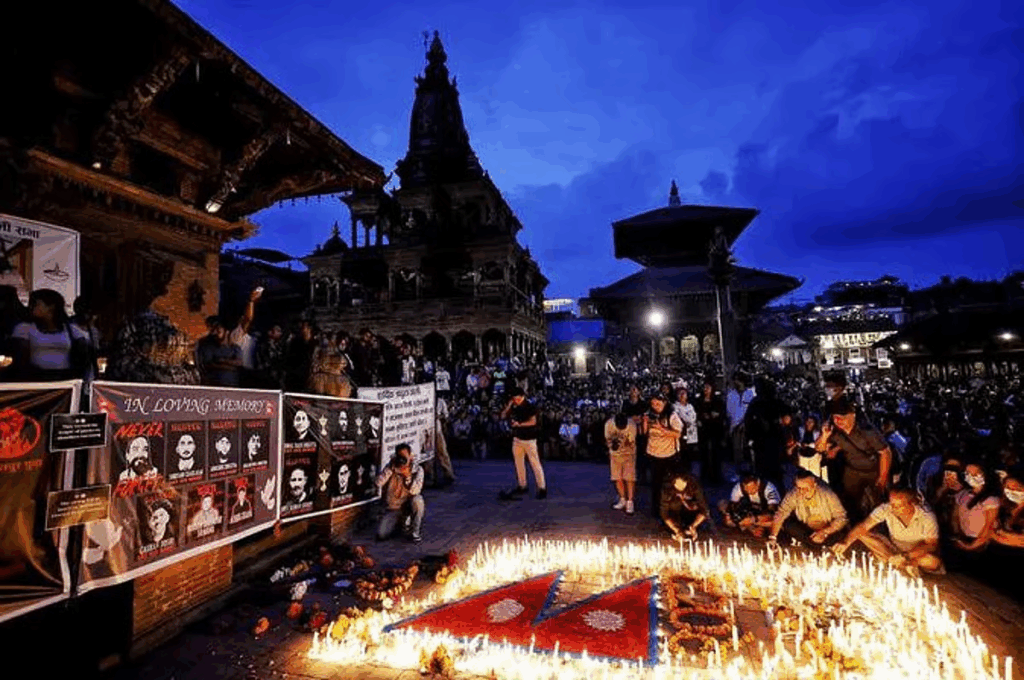
Nepal: Reality check behind the Euphoria

Nepal should prioritize fostering genuine inner-party democracy within existing political parties to develop capable mid-level leadership while maintaining equidistance from Hindutva and external powers to preserve its sovereignty and democratic institutions.

People paying homage to those who were killed in Nepal protests in September 2025. Photo/nepalitimes.com

Sushila Karki sworn-in as interim Prime Minister of Nepal wears a crown of thorns. Tasked to hold parliamentary elections within a period of six months, her initial steps are in the right direction. Good cabinet choices, the announcement of reparation, and the announcement of investigation into the killings of protesters.

A former Chief Justice of Nepal for just a year, she has rich legal experience. While being non-partisan for over three decades, she understands Nepal’s politics unlike most judges of superior courts in many common law countries, including India.

She is incorruptible and a strong-willed individual. The second attribute in the nebulous situation that is Nepal currently can have both useful and difficult dimensions. Like all democracies with weak civilian institutional frameworks, the end game of political control is wily negotiation on a range of issues, most importantly, the loaves of office. Not being part of the gravy train, she will have her task cut out, negotiating with biped bandicoots of all hues.

Public good is the attainment of the holy grail in her case and that of her new cabinet colleagues. Not necessarily shared by those who were shown the door and want it at best to be a revolving door!

Having no cadres of her own, but disparate youth groups, who while being effervescent presently, will in time disappear like the bubbles of protest they created. Some will attempt to create political vehicles of their own while many in due course will become part of the existent political machines they now decry. Others, giving themselves inflated importance, will, to put it mildly, not be helpful.

The duopoly of authoritarians, KP Oli and Sher Bahadur Deuba, both within their respective political machines, had little in common but remaining in office and power. They are out for the count on this round, but the results of the bout are a long way off. The Maoists under Prachanda also want a seat at the high table, though large sections of their cadre seem to have seen through him and his shenanigans. Writing him off would be a mistake. If nothing else, he has immense manipulative skills.

Karki will be expected to show political and administrative results across the board in too many areas in a time frame that will be daunting even for a consummate magician. Even a modicum of administrative reforms to tackle ingrained bureaucratic sloth and petty corruption, which the average citizen faces daily, will be difficult. Having no trained political cadres and without them looking over the shoulders in every one of the 77 Chief District Officer (CDO) offices in Nepal, reform is easier said than done!

The myth of Youth revolution-Pies in the sky!

Too much has been made of the youth revolution. That they were undeniably the catalyst is a no-brainer. They certainly are part of the reformation of Nepal, not the only ones. Widespread alienation of all sections of society from the organs of governance was tinder waiting for a spark.

A reading of the 18th Brumaire is instructive. There are too many parallels between contemporary social discontent and the advent of authoritarian populism in too many countries to ignore.

France 1968 influenced “cultural and political landscapes beyond France. It opened the way for new areas of social emancipation, including feminism, ecology, and gay rights.” As for real political change, c’est la vieThis is how it is.

Lest we forget, massive mobilisation of the youth notwithstanding, the movement failed to overthrow the government or enact a transformation of society. President Charles de Gaulle dissolved the National Assembly, called for new elections, in which his party won a landslide victory, effectively ending the youth upsurge.

The Arab Spring

This is the best fairy tale that emanated from the region since the genie came out from the lamp. In Tunisia, it is back to being what it does best: being a dictatorship. Apart from its cohabitation with ultra-right-wing Israel, Egypt just made sure its democratically elected leader died in prisonJordan will be Hashemite till they obey the diktat of the Golani brigade. No Zia ul Haq and his Arbid brigade presently to mow down Palestinians. Bahrain is secure as the causeway allows Saudi tanks to crush popular unrest. Libya, Yemen and Syria had consequences for all to see.

South Asia youth ferment and consequences

Bangladesh

FALGOON’ and CHAITRA are good months both in the Bengali and Nepali Calendar to visit either of the countries. The elections in both countries will hopefully have concluded, relatively peaceful.

Short of divine or other intervention, the Bangladesh Nationalist Party (BNP) and the Bangladesh Jamaat-e-Islami will be the main contenders, with the BNP clearly having the edge. The newly created party that represents a major section of the students that propelled the ouster of Sheikh Hasina will at best be the third, as the Awami League is not in the running. And an unreformed notorious Directorate General of Armed Forces Intelligence (DGBFI) waits in the wings, its talons sheathed for the moment.

Sri Lanka

The JVP has been the best-organized political party in Sri Lanka. It is no surprise that they rode the Aragalaya protests to electoral success. The creation of the National Peoples Power coalition was nothing short of genius. The Colombo elite personified by Ranil Wickremasinghe were shown the door. Anura Dissanayake has been cautious and astute so far in both domestic and regional politics. His only Achilles heel is the issues relating to the 13th amendment to the Sri Lankan constitution. But that is some way off as there is no overarching leadership in the Sri Lankan Tamil community. It is perhaps the only movement in this part of the globe recently that peacefully toppled the old, ossified elite and carpetbaggers of the clan, Rajapakse.

The choices in Nepal

The Hindutva crowd and Monarchists

They feed on each other just as mice in their filial cannibalism. Their support is presently marginal. Like the Tamil Hindu in India, the average Hindu Nepali can be observant to a fault but is not willing to exchange his or her hard-won democratic freedoms to saffron mendicants who promise them moksha or nirvana in only the afterlife.

It is the abject failure of the parties of the left and the secular Nepali Congress that has given space to those who have little respect for Nepal’s sovereignty. While the wannabe monarch, the beneficiary of a familicide that has yet to see proper investigation, certainly has the capacity to create mayhem. Not only was the lumpen able to storm Nakhu jail and free pro-royalists, but much of the burning and looting, not surprisingly, did not touch the palatial properties of the erstwhile royalty and its courtiers.

The good Nepali Hindu should realise that an embrace of Hindutva brings in its wake the tentacles of Akhand Hindutva India. A pipe dream of the saffron brigade which wants all the present SAARC countries with the exception of Afghanistan but the inclusion of Myanmar in their mythical Aryavart.

The CPN (UML), the Nepali Congress, the CPN (Maoist) all have gerontocratic leadership, which have clearly learnt nothing, as evidenced by their joint statement lamenting the dissolution of Parliament. Would they have been better off with a Nepali Cromwell yelling, “In the name of God, go“?

All of them have capable midlevel and grassroots leadership. The sooner all of them show greater inner party democracy, the better the prospects for parliamentary democracy in Nepal.

In the wings-India-China-USA

For the conspiracy theorists, it must be a dampener that India, the USA, and China have all recognized the legitimacy of the interim government under Karki. This is not to deny that all of them have been fishing in the Koshi and Gandaki river systems. If all of them let their nets and rods be for a while, it will help the Nepali people reiterate their own agency.

The Europeans and the Scandinavians have also not been innocent bystanders. Their ill-advised support to causes that do not befit a sovereign Nepal is legion. They would all help Nepal if they strengthen delivery mechanisms like the offices of the Chief District Officer, which have little resources, are understaffed and office equipment is better on display in museums.

Civil Society in Nepal, as elsewhere in Asia, needs to remember “beware of Greeks bearing gifts”.

To cite only instance, all the fiercely anticommunist donors have been funders of both the Marxist and Maoist influenced civil society organizations! And of course, the name of the game is “color revolution” for those who don pinko red to crimson red!

And not forget that the Army is nearby in Bhadrakali Marg.

The issues in Nepal are too many to enumerate here. Suffice to say, that the Nepalis did not do too badly without colonial interlopers and can do so again with a sagacious national leadership at all levels.

Nepal’s Political Reality: Sushila Karki’s Daunting Task

2025, Human Rights Features, SAHRDC in Media

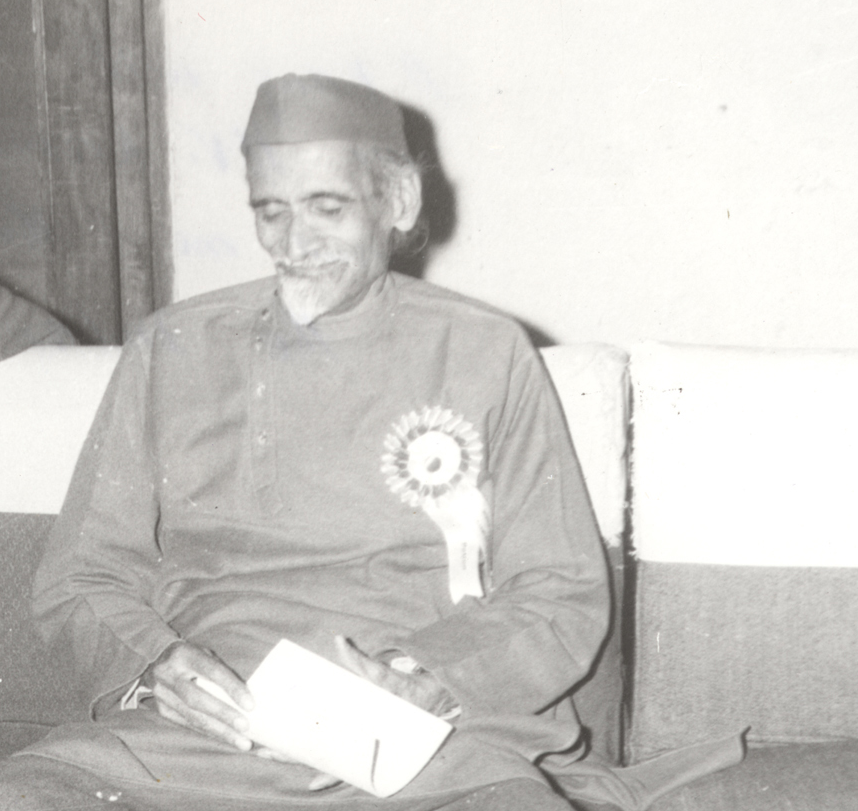
The Emergency, the Present and the Resonance of H.V. Kamath’s Ideas

As a member of the Constituent Assembly, Kamath had stood among a select few who had completely opposed Emergency provisions.

H.V. Kamath. Photo: punjabimanch.com

Recalling the 50th  year of Emergency on June 25, 2025, Ravi Nair, a human rights activist and the executive director of the South Asia Human Rights Documentation Centre (SAHRDC),  wrote a thought-provoking piece in the Supreme Court Observer regarding civil liberties and the Supreme Court.

I was entirely fascinated by the fact that Ravi Nair, a Malayali, was born on the island of Madagascar to a bureaucrat father and a homemaker mother and ended up in the same jail as a freedom fighter and member of the Constituent Assembly, which shaped the Constitution of India.

Ravi was arrested during the Emergency in 1975 and incarcerated in Tihar Jail, where he encountered H.V. Kamath. Kamath, who hailed from coastal Karnataka in Mangalore, relinquished a prestigious career in the Indian Civil Service to join the Indian National Congress and later the Forward Bloc. He was a prominent figure in the Constituent Assembly and served as a Member of Parliament in the provincial legislature from 1950 to 1952, as well as in the first and third Lok Sabhas, prior to the infamous Emergency declared by Indira Gandhi. It was indeed a historical fortuity that Kamath, a seasoned freedom fighter, and Ravi, a young socialist activist, crossed paths in Tihar Jail, undoubtedly not the best environment for socialisation.

It is ironic that life in jails remained marginally better than in torture camps, sterilisation camps, or for those destined to live under the scanner of beauty notions of the beast and his packs. As Ravi Nair noted, the news of the Supreme Court’s decision in ADM Jabalpur v. Shivkant Shukla, in which the court spinelessly endorsed the government’s arguments and, in a single stroke, reaffirmed that the right to petition the court for violations of fundamental rights – including the right to life – could be suspended during an emergency, reached Ward 13 on a “muggy Wednesday.” The Supreme Court made the decision on April 28, 1976, but it took some time for the news to reach the jail. Despite Justice H.R. Khanna’s courageous dissent, the decision provided little hope. In that context, H.V. Kamath elucidated the implications of the ruling to his fellow inmates.

Kamath was indeed the right person for the task. As a member of the Constituent Assembly, he stood out among a select few, including K.T. Shah and Hriday Nath Kunzru, who completely opposed Emergency provisions. He recognised the significant potential for misuse of this provision and the paradox it posed for a newly independent country emerging from colonial oppression, as it risked embedding such a draconian measure in its own constitution. He expressed his discontent with the new draft presented by Ambedkar, labelling it a mere rehash of the old draft of the same article. The following words of Kamath  reveal his profound concern for human rights: 

“The Constitution has been founded – at any rate, we the founding fathers here have tried to found the Constitution – on what I would call the ‘Grand Affirmation’ of fundamental rights. We have tried to build on that edifice of democracy, but I find surmounting that edifice is the arch of the “Grand Negation”. First, the grand affirmation, then that edifice, at any rate that façade of democracy, and surmounting that edifice or façade is the great negation of Part XI, the notorious negation of Part XI; and article 280 is, to my mind, the keystone of this arch of autocratic reaction.” 

Articles 275, 278, and 279 of the Draft Constitution would eventually become Articles 352, 356, and 358 of the Constitution.

While moving an amendment to clause (1) of the Article, which stipulates that the president shall proclaim an emergency “acting upon the advice of his Council of Ministers” rather than on his own volition, Kamath remarked :

“I have ransacked most of the constitutions, and I find no parallel to this chapter of emergency provisions in any of the other constitutions of democratic countries in the world. The closest approximation, to my mind, is reached in the Weimar Constitution of the Third Reich, which was destroyed by Hitler taking advantage of the very same provisions contained in that constitution. The Weimar Constitution of the Third Republic exists no longer, and that has been replaced by the Bonn Constitution. But those emergency provisions pale into insignificance when compared with the emergency provisions in this chapter of our Constitution.” 

It is worth noting that Kamath’s amendments were rejected outright.

Kamath refused to share the hope and optimism of Dr Ambedkar or B.M. Gupte that the emergency provisions would likely remain a dead letter, implying that it would not be necessary to use these provisions or activate them. Kamath remarked that perhaps the Prime Minister and other ministers are honourable men who would never misuse it. “But a constitution is not meant for Dr Ambedkar, Pandit Nehru, or Sardar Patel; the constitution is meant not only for this generation, but we are building it for other generations to come”, although he had not anticipated such a situation arising from Nehru’s own daughter, Indira Gandhi.

Kamath’s concern remained a wild cry, not resonating with the end result as the emergency provisions, incorporated in the draft constitution, were adopted by the Assembly on August 20, 1949.  Kamath expressed his exasperation in the end, saying , “This is a day of sorrow and shame. May God help the Indian people.” 

Gods and goddesses did not assist the Indian people as Kamath had hoped. The Emergency was declared during the 25th year of the Indian Republic’s silver jubilee. The Emergency provisions included the suspension of all fundamental rights, such as the right to free speech and expression, the right to form associations, the right to assemble, and the right to move freely across India. The right to constitutional remedies was also suspended. This situation proved to be disastrous for democracy, as the national emergency was enforced for the first time from June 25, 1975, to March 21, 1977.

Ravi Nair’s article examines the surveillance nature of today’s state, focusing on the status of human rights and the legal implications of Supreme Court decisions concerning human rights violations since the emergency. It seeks to understand the underlying causes rather than merely addressing the symptoms, thereby clarifying our current position regarding judicial interventions. However, without delving into the present state of affairs, which would undoubtedly be deeply unpleasant, I would like to pay tribute to the foresight of individuals like Kamath; we owe them our gratitude for their anticipation and concerns.

E. K. Santha teaches at Sikkim Manipal University, Sikkim and is the author of Democracy in Sikkim: An Untold Chronicle.

The Emergency, the Present and the Resonance of H.V. Kamath’s Ideas – The Wire

HRF Monthly, Human Rights Features

Due Process: The nuns, the State, and the machinery of suspicion: An account

The recent arrest of two nuns in Chhattisgarh under anti-conversion and NIA laws reveals the fictional limits of the Indian State’s persecution of religious freedom, all at the cost of due process.
IN A MATTER OF RELIEF, on August 2, 2025, bail was granted to the two Catholic nuns, Sr Preeti Mary, Sr. Vandana Francis and a tribal youth who was accompanying them in Chhattisgarh, Sukhman Mandavi.  All evidence suggests that the arrests, made on July 25, were needless in nature.

On July 25,Sr Preeti Mary and Sr. Vandana Francis of the Congregation of Assisi Sisters of Mary Immaculate were arrested by the Chhattisgarh Government Railway Police (‘GRP’) in Durg Railway Station in Chhattisgarh on unfounded charges of religious conversion and human trafficking. A young man accompanying the nuns, Sukhman Mandavi, who hailed from a tribal community, was also detained.

The nuns, originally from Kerala, were waiting at the railway station platform with three other women, all of whom hailed from tribal communities and were aged between 18 to 20 years of age, to catch a train to Agra.Media reports suggest that when the Train Ticket Examiner enquired the three women regarding their tickets. On informing the TTE that their tickets were with the nuns, the TTE immediately called members of the Durga Vahini Matrushakti and Bajrang Dal, right-wing activist groups that have consistently engaged in harassing religious minorities in the country. Soon the nuns were surrounded, heckled and verbally abused, with a mob accusing them of forceful conversion and trafficking. This occurred even as the women and nuns reiterated that they were travelling to Agra to work in hospitals as helps at salaries of Rs 8,000 – 10,000 per month.

Police reports state that the women were being taken to Agra for vocational training and employment. The incident escalated into a standoff, with Bajrang Dal members staging protests outside the Government Railway Police station. Counter-protests soon followed, with the local Christian community defending the nuns.
This occurred even as the women and nuns reiterated that they were travelling to Agra to work in hospitals as helps at salaries of Rs 8,000 – 10,000 per month.

The FIR, registered under sections of the Chhattisgarh Religious Freedom Act and the Immoral Traffic (Prevention) Act, was based on a complaint by a local Bajrang Dal worker, who alleged that the accused forcibly converted three women from Narayanpur district and were attempting to traffic them.

Even though the police arrived while the right-wing group workers were heckling and intimidating the group, they did not intervene to stop the intimidation of the nuns. The trio (the two nuns and the youth) were then arrested and taken to the Durg Police station. Then, a local court sent them to judicial custody till August 8.

They were charged under various sections of the Bharatiya Nyaya Sanhita, 2023 , the Chhattisgarh Freedom of Religion Act and the National Investigation Agency (NIA) Act.

According to the FIR, charges include:

    Section 143 of the Bharatiya Nyaya Sanhita (BNS) – Trafficking of person
    Section 4 of the Chhattisgarh Freedom of Religion Act – Unlawful Conversions

The nuns, the State, and the machinery of suspicion: An account
Are anti-conversion laws antithetical to the Constitution of India?

As trafficking is considered a ‘Scheduled Offense’ under the amended NIA Act, the Centre can invoke the provisions of the Act for investigation by the NIA, with proceedings before the special NIA Court.

The nuns moved bail applications before both the Judicial Magistrate First Class (‘JFMC’) and the Sessions Court at Durg, in succession. The JFMC rejected the bail application on July 29, 2025. On July 30, the Sessions Court also denied bail on the ground that only the NIA Court had jurisdiction to hear the application because of the human trafficking charge. The sanction of the Central government, on application from the state government, to try the case as a Scheduled Offence under the NIA Act, need only be furnished in fifteen days.

On August 2, the nuns and the tribal youth were conditionally granted bail by the NIA Court in Bilaspur, Chhattisgarh, at a bond of Rs 50,000 each. The court also imposed the condition that all three must surrender their passports and fulfill reporting requirements.

Amidst increasing anti-Christian sentiment, religious freedom is at a crossroad

As a secular state, India is characterised by religious tolerance, equal treatment of all religious groups and respect for all faiths and religions. Constitutionally, all religions enjoy the same protection without favour or discrimination. Secularism is a basic feature of the Constitution, and the latter protects freedom of religion and conscience, as well as the right of all individuals to freely profess, practice and propagate religion under Article 25,.

While freedom of religion and conscience is a fundamental right in India, its operation is subject to public order, morality, health and other fundamental rights. This is in consonance with Article 18(3) of the International Covenant on Civil and Political Rights.
In 2022, a written statement submitted by the European Centre on Law and Justice to the UN General Assembly highlighted the scope and extent of violence perpetrated against the Christian community in the country owing to these state anti-conversion laws.

However, in India, various anti-conversion laws impose restrictions, prohibit conversions from one religion to another by the use of force, inducement, allurement, or fraudulent means. In 2022, a written statement submitted by the European Centre on Law and Justice to the UN General Assembly highlighted the scope and extent of violence perpetrated against the Christian community in the country owing to these state anti-conversion laws. The statement also urged the UNGA to call on India to repeal the anti-conversion laws. The constitutional validity of these laws has been contested before state High Courts and the Supreme Court.

In Rev Stanislaus v. State of Madhya Pradesh (1977) the Supreme Court of India had upheld the constitutional validity of a legislation prohibiting conversion of a person by force, fraud or allurement. While this has precedential value, the rulings in states are not uniform. In fact, leading up to the Rev Stanislaus decision, the Orissa High Court had, in 1972, held such a law as unconstitutional, a decision subsequently overturned by the top Court five years later.

The anti-conversion laws are in effect against the constitutional guarantee to practice and propagate one’s religion. If freedom of religion is essential to support personal beliefs rooted in the inward association doctrine, then individuals must have the right to change their beliefs and religion. Limiting this freedom to change one’s religion undermines the very principle of religious freedom. They limit and punish an individual’s right to convert and right to persuade or support another individual to convert voluntarily.

Moreover, while upholding the constitutionality of such laws, the Supreme Court, in 1977, failed to discuss the definitions of inducement and allurement. This wide scope for defining the terms allows irresponsible statements from people in powerful positions, with very real implications for practitioners of the faith.

This is precisely what happened in the case concerning the nuns in Chhattisgarh. Framing the incident as one of women’s safety, Chhattisgarh Chief Minister Vishnu Deo Sai posted on X: “Three daughters of Narayanpur were promised nursing training and later jobs. It’s an attempt to convert people through human trafficking by allurement. Investigation is ongoing. The case is sub-judice.” The equivalence of allurement to employment and education opportunities without any reasonable boundaries further permit the harassment of the community on unreasonable grounds.

Such laws empower and encourage government persecution, vigilante violence, and discrimination against religious minorities, while also intensifying efforts to suppress civil society organizations. Given these particularly severe religious freedom violations, the USCIRF in 2023 recommended that the U.S. Department of State designate India as a country of particular concern under the International Religious Freedom Act.

The arrest of the nuns comes amidst growing fear and marginalization faced by Adivasi (indigenous) Christians in Chhattisgarh. Reports highlight instances of families being ostracized, denied access to local resources, and even prohibited from burying their dead-on ancestral land. Observers note that the rising hostility includes social boycotts, violence, and pressure to reconvert.
The nuns, the State, and the machinery of suspicion: An account
A pan-Indian law against ‘forced’ conversions should respect right to privacy and not appear to be arbitrary

Degree Prasad Chouhan, state convener of the Chhattisgarh Association for Justice and Equality, recently told Frontline that such incidents are on the rise, fuelled by state repression and caste tensions. He emphasised, “Anti-conversion rhetoric is being used to justify discrimination against Adivasi Christians. Despite constitutional protections, Christians are treated with suspicion, legally harassed, and deprived of basic rights.” He also pointed out that local gram sabhas (village councils) have exploited laws such as the Panchayats (Extension to Scheduled Areas) Act, which grants autonomy to tribal communities, to prevent nuns and priests from entering villages.

Moreover, as noted earlier, the FIR was registered on the basis of a complaint by right-wing group workers, and not the alleged ‘victims’ of conversion (the women in question).

Notably, the Karnataka High Court last month, in Mustafa and Ors v State of Karnataka (2025),  read down provisions of Section 4 of the state anti-conversion law , quashing a FIR against three Muslim men and holding that third parties cannot file such cases.

In the case of the nuns, although the Freedom of Religion Act has been invoked, no evidence points to the fact of conversion. One of the women involved in the incident has publicly stated that she was coerced into making statements against the nuns. Despite her repeated pleas and statements pointing otherwise, the police recorded statements to the contrary. This could have been done seemingly under influence of right-wing group workers.

The family members of the tribal women also denied allegations of coercion. “Our parents are no longer alive, and I sent my sister with the nuns so she could take up a nursing job in Agra,” one family member has stated, “The sisters (nuns) have done nothing wrong. Even the boy is being falsely implicated.”
Eyewitnesses reported that before their arrest, the nuns were illegally detained, harassed, and humiliated by Sharma and her associates in the presence of police personnel.

Increasingly, state machineries are giving in to mob justice

That the TTE prioritised calling right-wing Hindutva group functionaries instead of the police first is telling of the anti-Christian sentiment rife within public institutions in the country. That the police stood by and watched as the nuns were intimidated by the right-wing Hindu fundamentalist activists gives more credence to this assertion. Videos circulated of the incident show one woman in particular, Jyoti Sharma, a member of the Durga Vahini Matrushakti, use derogatory language while accusing the nuns of forcibly converting and trafficking the girls.

Eyewitnesses reported that before their arrest, the nuns were illegally detained, harassed, and humiliated by Sharma and her associates in the presence of police personnel. Despite this, no FIR has been filed against Sharma. The Chhattisgarh Christian Forum claims it will file a counter FIR.

Only law enforcement agencies possess the authority to detain and question suspects and investigate crimes, and they must do so in accordance with due process. However, concerned citizens have raised doubts about the impartiality of the law enforcement agencies in such a tense situation. Rather than de-escalating the conflict and properly investigating the allegations, the Chhattisgarh police based their FIR largely on the statements from the right-wing group.

The Supreme Court has, on several occasions, underlined the dangers of mob vigilantism. But, as noted in a recent editorial in Indian Express , whether it is cow protection cases or matters related to religious conversion, law enforcement agencies show a disturbing tendency to let self-proclaimed community leaders take over.

The NIA Act has been invoked to create procedural ambiguity

The NIA Act constitutes an investigation agency at the national level to investigate and prosecute offences affecting the sovereignty, security and integrity of India, security of State, friendly relations with foreign States and offences under Acts enacted to implement international treaties, agreements, conventions and resolutions of the UN, its agencies and other international organizations.

The legislation empowers the Central government to direct the NIA to take over a case on a request made by the state government or in its own capacity. The NIA Act was amended in 2019 to enlarge the mandate of the NIA by inclusion of offences related to human trafficking, manufacture/sale of prohibited arms, cyber-terrorism and offences under the Explosive Substances Act, 1908, and expanded its jurisdiction beyond India.

The NIA Act was brought in to facilitate speedy trials and deliver quick judicial pronouncements by the establishment of the special courts. As of December 5, 2024, the NIA had registered 640 cases since its inception. There were 109 cases under active investigation and 395 under further investigation. 505 cases had been charge- sheeted, while 4174 accused had been arrested so far by the NIA. 595 have been convicted.
The nuns, the State, and the machinery of suspicion: An account
State of satire or satire of the State?: Notes on the FIR against ‘Ms. Medusa’

By booking the nuns under NIA, religious freedom has been completely conflated with terrorist activities and trafficking. This indicates the lengths to which the State is willing to go in order to create a chilling effect for religious minorities in India. The procedural ambiguities in legislations like the NIA further ensures that the accused are systemically denied due process and their right to a fair trial, creating endless points of contention with the State.

For the nuns and the young women, a routine train travel for better economic opportunities has turned into a nightmare facilitated by state machinery and legislation. The sanctity of the religious habit has been violated to further a collective agenda to impinge on the fundamental rights of religious minorities in the country.

The situation of minorities, and in particular Muslims and Christians, continues to remain parlous.

Scroll to Top