Home

AFSPA in the North East – the never ending trauma

The Armed Forces (Special Powers) Act [AFSPA] was passed by the Indian Parliament on September 11, 1958. The Parliament was told it would last no longer than a year. In 2022, we are still waiting for that year to end.

The Act contains immunity clauses for the armed forces even if they are involved in violations of the right to life or torture.

In theory, the Union Government could give permission upon application for prosecution of armed forces personnel accused of offences. According to a question raised in the Rajya Sabha (upper house of Parliament) in 2015, a total of 38 requests for the sanction of prosecution under AFSPA and the Armed Forces (Jammu and Kashmir) Special Powers Act, 1990 were made between June 1991 and March 2015. Of the 38, permission was denied in 30 cases while the remaining eight requests were pending as of March 2015.

Home

Extension of policing powers to BSF: comparable international experiences BYRAVI NAIR OCTOBER 25, 2021

Northern Ireland’s Royal Ulster Constabulary experience offers a lesson to Indian lawmakers: the militarised policing of a local population by a centrally-controlled force that has been awarded extraordinary powers without accountability measures will likely result in human rights violation, explains RAVI NAIR.

————

MOST modern democracies adhere to the policy of separation between the military and the police. Many nations have made limited exceptions for certain paramilitary forces.

Nevertheless, as Northern Ireland’s experience illustrates, the mixing of forces with inherently different mandates (armed combat versus law enforcement) and targets (enemy versus local citizen) is likely to do more harm than good.

Home

Shifting the borders inland: Policing powers of the Border Security Force

 
Amidst the recent decision to increase the jurisdiction of the Border Security Force in West Bengal, Punjab and Assam, RAVI NAIR examines the encroachment of Constitutional federalism by a union government gradually inching the country towards an authoritarian state.
 

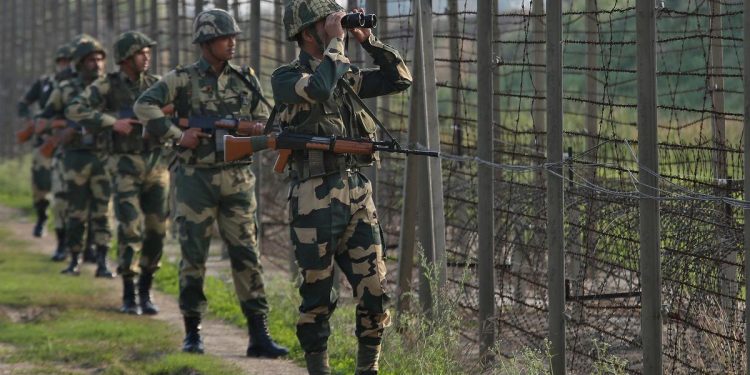
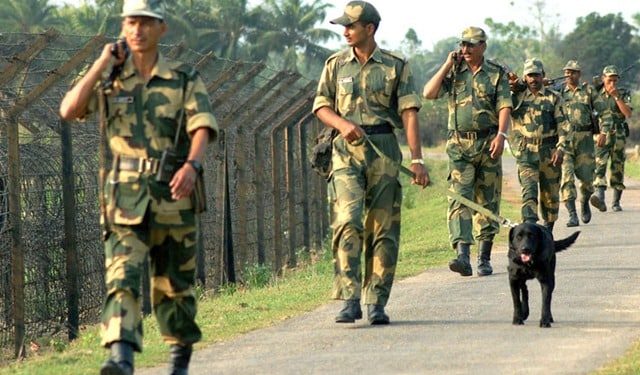
Union government’s decision to extend the jurisdiction of the Border Security Force (BSF) to over 50 km in three states – namely, West Bengal, Punjab and Assam, from the barbed wire fence with Bangladesh and Pakistan, along with the grant of policing powers, is one more building block in the creation of a unitary authoritarian state.

Home

The right of private defense – a legal view

An SAHRDC backgrounder

Home

Indian Diplomacy in Afghanistan – Hoist on its own petard

1 September 2021

Think piece 3 on Afghanistan – Can be freely used with due credit to SAHRDC

The Indian Express of 30 August 2021 mentions that 260 Indians are still stranded in Kabul. Representatives of Indian NGOs from the health, education and medical sectors have informed SAHRDC that over a 100 of them are NGO workers. Most of them have little money to buy even the bare necessities. Banks in Kabul opened a few days ago. Each account holder is allowed to withdraw small amounts. Most of the Indian NGO staff is resigned to losing their savings from their employment in Afghanistan.

Home

Afghanistan- A tragedy foretold – The setting of the Card table with cardsharps all around

  25 August 2021

 SAHRDC Think Piece 2 on Afghanistan (May be freely reproduced with due credit to SAHRDC)

The mythological yarns of Hinduism are many splendoured.  They make for many hours of wonderful reading. They also attest to the fertility of the Hindu imagination more than any sound historical record.  The revanchist Hindutva supporter who dreams of an ‘Akhand Bharat’, or ‘Greater India’, would like us to believe that the Gandhara kingdom mentioned in the great Indian epics of the Mahabharata and Ramayana comprises most of what was part of Pakistan’s North West Frontier province, now called Khyber Pakhtunwa, along with modern day Eastern Afghanistan.

Scroll to Top