
2025, Articles to read

The Hindutva agenda: The Electoral rolls gambit

Instead of hollowing out Universal Adult Franchise which enriches democracy, can be undermined by mass disfranchisement of those entitled to vote.
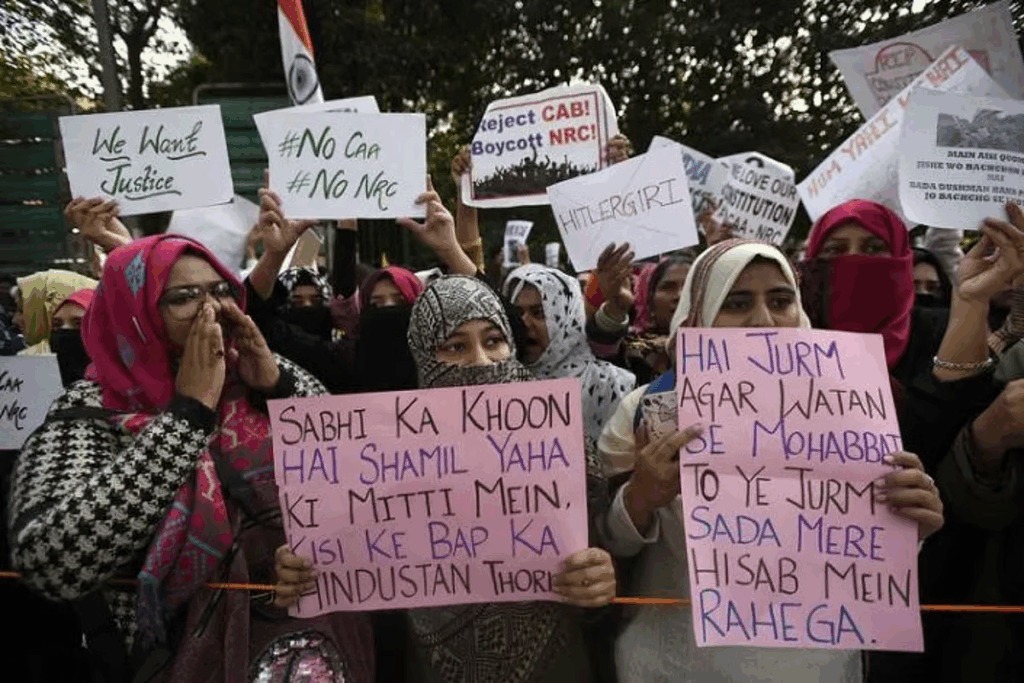
Hindutva Agenda on electoral politics in India. Image is representational.Photo/twailr.com

Universal Adult Franchise in the aftermath of an impartially conducted census in tandem with a caste census will sound the death knell of continued upper caste supremacy, and the politics of religious majoritarianism in India. It is little wonder that the census has not taken place since 2011.

Data on caste was not available since the 1931 census. The UPA government initiated the Socio Economic and Caste Census (SECC) in 2011. Specific data on caste was not released. Observe the difficulties of the Congress governments in Karnataka and Telangana and the NDA government in Bihar.

General elections taking place without the freezing of a fresh delimitation of constituencies until the concerns of the Southern states are addressed would be stimulus for those giving vent to feelings not confined to greater autonomy.

A frontal attack on adult franchise would be folly even for the supercilious amongst the twice born and the well-heeled. In the wake of the Mandal Commission report, it is difficult to stop the inching towards a more socially equitable society for long.

Even the Rashtriya Swayamsevak Sangh (RSS) in September 2024 indicated its “support for a Caste Census, while adding that it should not be used for political or electoral purposes.”

The Genesis

Adult franchise was always seen as a threat to the upper castes and the propertied classes. Dr B R Ambedkar had argued that it be part of the fundamental rights chapter but Sardar Vallabhbhai Patel was not amenable to this as Chairperson of the Advisory Committee.

Many important Congress men like Mosalikanti Thirumala Rao opposed universal adult franchise. Brajeshwar Prasad argued, universal adult franchise as a ‘violation of the tenets of democracy’. Even social democrat, K.T. Shah and liberal Hridhay Nath Kunzru were not enthused by the prospect of universal adult suffrage, albeit on the grounds of literacy. Krishna Chandra Sharma and a few other Congress men supported it.

When the Constituent Assembly adopted the principle of universal adult franchise, Alladi Krishnaswami Iyer, a member, remarked that this was done, “with an abundant faith in the common man and the ultimate success of democratic rule, and in the full belief that the introduction of democratic government on the basis of adult suffrage will bring enlightenment and promote the well-being, the standard of life, the comfort, and the decent living of the common man”

The lone Communist member of the Constituent Assembly, Somnath Lahiri wanted proportional representation in addition to universal adult franchise. As for Hindutva supporters, the constitution itself was not acceptable.

The Mandal commission report resurrected the need for caste-based apportioning of the development cake. Since then, it has been a protracted rearguard battle by much of the state machinery on behalf of the socially and economically haves who want to be perpetual haves.

Judicial Insouciance

India is in real danger of slipping into Hindutva majoritarianism. It will be no small measure due to judicial attitudes on many key issues related to the continuance of representative democracy in India.  The most recent of which is the inordinate delay in deciding the challenges to Constitution Bench judgment in Anoop Baranwal v. Union of India (2023).

In Anoop Baranwal, the Constitution Bench analysed Article 324 of the Constitution dealing with the appointment of Election Commissioners. It spoke of the need to take the appointment “out of the exclusive hands of the executive.

It said that “a pliable ECI, an unfair and biased overseer of the foundational exercise of adult franchise, which lies at the heart of democracy, who obliges the powers that be, perhaps offers the surest gateway to acquisition and retention of power”.

The Court was assertive when it said that “the outpouring of demands for an impartial mode of appointment of the members require, at the least, the banishing of the impression that the ECI is appointed by less than fair means.”

As Senior Advocate, Kaleeswaram Raj, further succinctly puts it:

“The Modi regime promulgated the Chief Election Commissioner and Other Election Commissioners (Appointment, Conditions of Service and Term of Office) Act in 2023 with a view to nullify the Constitution Bench judgment in Anoop Baranwal v. Union of India (2023). The Act excluded the Chief Justice of India (CJI) and included a Cabinet Minister to be nominated by the Prime Minister in his place, as part of the Selection Committee for choosing the Election Commission of India (ECI). This statute was legally challenged in several writ petitions which are yet to be finally heard. Significantly, the petitioners also sought a stay of the enactment. A Bench, led by Justice Sanjiv Khanna (as he then was), heard the application for a stay and rejected it on March 22, 2024, by a detailed order in Dr. Jaya Thakur and others v. Union of India (2024). Had the statute been stayed, the country could have had a different umpire for the 2024 Lok Sabha elections and the subsequent Assembly elections. In all probability, a more independent ECI could have had the potential to conduct the elections more fairly and impartially. That this did not happen shows the Supreme Court’s failure to act at a time when it was supposed.”

The Hindutva judgement of 1995 of the Supreme Court opened the floodgates for ultra-nationalism.  This was followed by the Manohar Joshi petition. The gates of secularism had been breached.

The Election Commission of India

One of the great popular myths in India popularized by the corporate owned media was that the arrival of T.N. Seshan gave the Election Commission of India its gravitas. Few remember Sukumar Sen who in an age where technology was non-existent in the electoral process not only got it up and running but did a splendid job. 

T Swaminathan, a former ICS officer who conducted the historic March 1977 election got no kudos for it. Self-effacing, he drove out into the sunset. Few remember the then iconic poster in all the official languages across India. “Vote without fear, your vote is secret.” It made a difference.  Small but important.

J M Lyngdoh will be remembered for being a good helmsman on Gujarat during 2002 and dealing with the fulminations of then Chief Minister, Narendra Modi, with a rare dignity.

Seshan was the quintessential civil servant who finds his or her enlightenment only after retirement. He was then a young Collector in Madurai. Kodaikanal, fell within his jurisdiction. He was designated as detention officer for Sheikh Abdullah in detention there.

Abdullah had written to Indira Gandhi asking him to be spared the ignominy of his personal letters from his wife, Begum Abdullah, being steamed open and read by the detention officer. Seshan was ticked off by Delhi for being too much of an eager beaver. There is a self-serving account of this in Seshan’s autobiography.

T.N. Seshan got catapulted as Chief Election Commissioner in December 1990 through some astute lobbying with then Prime Minister, Chandrashekar on his behalf.

T.N. Seshan’s mind since 1994 was the incubus of the electoral identity cards. We were told that that these cards were the panacea for the ills of the electoral system. The then nascent data industry hit the mother lode. From Electoral Identity Cards to Aadhar cards to Digiyatra farmed out to a private concern, this cornucopia, sorry, Kamdhenu cow still delivers to the deep state and the surveillance and computer industry. The latest being face recognition technology across many cities in India.

There is a dire need for a comprehensive performance audit of the Election Commission of India.

Election Commission and the BJP Government Confusion, their timeline

The first deletions

In 2015 researchers argued that the marriage of Aadhaar and EPIC will exacerbate the principal problem it is intended to solve: voter disenfranchisement and registration irregularities.  An initiative known as the National Electoral Roll and Purification Program (NERPAP). NERPAP operated for a few months before being halted by a Supreme Court decision that limited the use of Aadhaar to four specific welfare schemes. In the brief period it was operational, NERPAP linked the registration information of 320 million voters to their Aadhaar number—but also disenfranchised 3 million voters.

In April 2018, then Union Information Technology (IT) minister, Ravi Shankar Prasad said that he was personally not in favour of linking Aadhaar card with electoral photo-identity cards (EPIC) of voters as the two served different purposes.

In June 2018, the Election commission stated, that a “new system will ensure real-time tracking of each stage right from the EPIC generation by the Electoral Registration Officer till the delivery of the voter ID card to the elector through the Department of Posts.”

In February 2019, Election officials have said that Electoral Photo Identity Cards were only for new voters, others can use any ID proof.

In December 2022The Minister of Law and Justice, Kiren Rijiju told Parliament that the Election Laws (Amendment) Act, 2021, allowed Electoral Registration Officers to require the existing or prospective elector to provide the Aadhaar number for the Purpose of establishing identity on a voluntary basis.

Consent was to be obtained from the elector for Aadhaar authentication in Form 6B. There was no provision for withdrawing consent. Linking of Aadhaar was process driven and no targets have been given for linking Aadhaar with EPIC, we were told.

We were assured that the ECI strictly follows the guidelines prescribed by Unique Identification Authority of India (UIDAI)  and does not store the Aadhaar numbers in its database. The Aadhaar number is used only for authentication purposes and ECI does not retrieve any personal information from the UIDAI Aadhaar data base.

Earlier Hari Shankar Brahma, a former Chief Election Commissioner welcomed the decision taken by the Centre to introduce the Election Laws (Amendment) Bill 2021 which was passed in the Parliament. “It is a very good idea. Linking a voter ID card with an Aadhaar card is best in the country and after that, you can detect and remove duplicate, bogus voter ID cards and purify the electoral rolls and election database….” 

In August 2021, the government approached the Unique Identification Authority of India (UIDAI) with a proposal to permit the Election Commission (EC) to use Aadhaar for registration of new voters.

Aadhaar verification could be used for faster delivery of some other services such as change of address as well, the Law Ministry suggested.

In July 2023, Dr Sabyasachi Das of Ashoka University published a report called “Democratic Backsliding in the World’s Largest Democracy” which outlined two manipulations in detail that were carried out in the 2019 Lok Sabha elections.

Firstly, Registration manipulation, which is the padding of the electoral roll. By adding and deleting voters strategically. By manufacturing fake voters, most, if not all, of whom vote for the BJP.

Secondly, turnout manipulation, which is the addition of voter tallies after the polls have closed-most, if not all, of whom vote for the BJP.

Examples were given, claims supported. Soon thereafter Ashoka University was raided and given a strict warning by the Government. Dr Sabyasachi Das was fired thus, giving a clear signal to all universities and institutions in India, to not pursue any research pertaining to the electoral system in India. There hangs a tale.

In March 2025, Election Commission was to fix duplicate voter ID numbers issue in 3 months.

In March 2025, a Hindutva publication informed us that, “The Election Commission announced plans to link Aadhaar numbers with Electoral Photo Identity Cards to combat electoral fraud and fake voters. This step follows consultations with UIDAI to enhance the transparency and accuracy of voter rolls.”

In July 2025, the Election Commission informed the Rajya Sabha that there was no category of suspicious voters. It informed Rajya Sabha that the process of linking Aadhaar and voter ID cards have not begun.

In 2025, a bolt from the blue, the ECI decided that Aadhar cards were inadequate.

Then the Supreme Court suggested that they be accepted.

The issues around the present round of disenfranchisement

For the Poor – Ration Cards not sufficient proof

In 1997, the Targeted Public Distribution System (TPDS) was launched, focusing on distributing food to the poor through special ration cards.  In 2013, The National Food Security Act (NFSA) came into force, providing a legal right to subsidized food grains for a large portion of the population.  In 2018, the “One Nation One Ration Card” (ONORC) scheme was launched, enabling portability of ration cards across the country for migrant workers and their families. For the rural poor, the ration card is the most prized possession they receive from the state.

In an incisive article, Prof Irudayam and Arif Nizam have laid bare how nearly 3.5 million migrants (4.4% of the total voters).  have been labelled as “permanently migrated” for being absent during house-to-house verification. These voters now face permanent disenfranchisement not just in their places of work but also at home.

Voter ID Card

The Election Commission of India (ECI) requires citizens to produce Electors Photo Identity Card (EPIC) at the polling station before casting their vote. However, those who are unable to produce their voter’s ID card may use…Passport Driving License Service Identity Cards with photograph issued to employees by Central/State Govt/PSUs/Public Limited Companies Passbooks with photograph issued by Bank/Post Office PAN Card Smart Card issued by RGI under NPR MNREGA Job …”

The BJP had its goals mapped out since it came to power in the Modi incarnation in 2014.  As early as 2018, Amit Shah, the home minister stated that they were here to stay in power for the next 50 years. The Prime Minister was having 1000-year visions.

Monitoring

The Government will not allow any credible international election monitoring organization into India. It is incumbent that a national group like the Constitutional Conduct Group take up this task. Most of them have conducted elections at all levels and are familiar with the electoral machinery. The Mahagathbandhan initiative of going to the voter is correct.

Democracy has certainly been enriched by universal adult suffrage. The surest way to undermine it is mass disfranchisement of those entitled to vote.

The RSS as pater familias of the Sangh Parivar does not believe in democracy, internal or external. Its adherents duplicitous, swear loyalty to the constitution filing nominations for elections or getting government jobs while seeking to establish a Hindu majoritarian state.

The liberals from the outset revealed a gullibility that is still exasperating. In the 1960s and early 1970s, the slogan in Bihar by feudal vigilante armies near polling booths was,” Vote tu mahara, Booth hamara.” The vote is yours, the booth is ours. All this while they stuffed the electoral boxes!

Technology has come a long way since then, Electronic Voter Machines without Verified paper audit trail (VVPAT) in most cases. Mass deletions of voters from electoral lists across many states in India are dry runs for the general elections. And technology in India is available for precision warfare but not periodically updating digitally readable voters lists.

For us, the bells toll.
Hindutva Strategy: Electoral Rolls and Caste Census Impact

2025, Human Rights Features, SAHRDC in Media

The Emergency, the Present and the Resonance of H.V. Kamath’s Ideas

As a member of the Constituent Assembly, Kamath had stood among a select few who had completely opposed Emergency provisions.

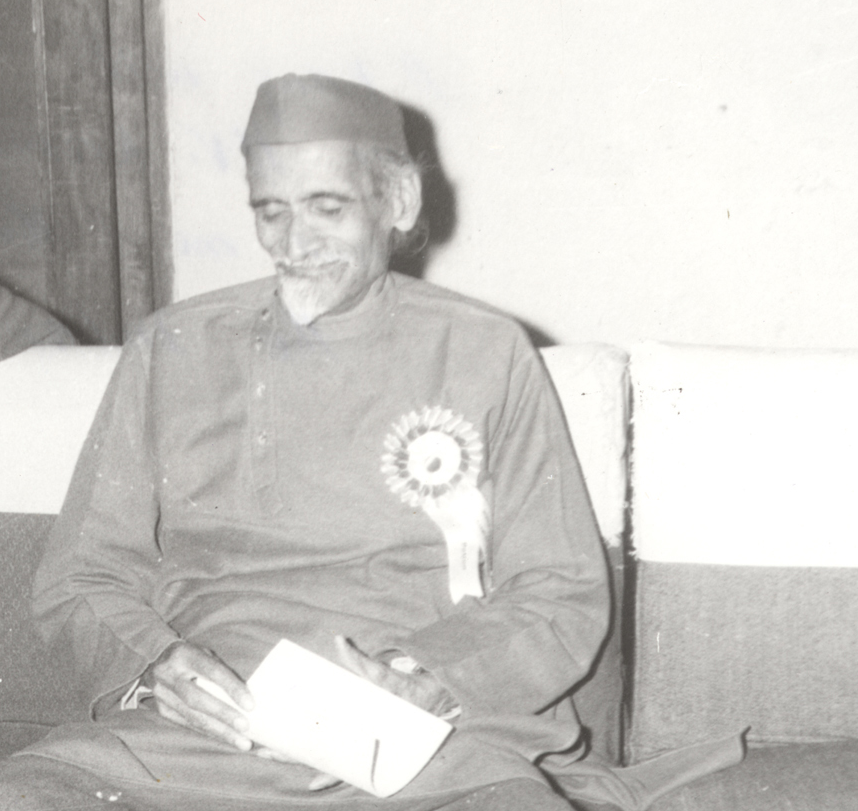
H.V. Kamath. Photo: punjabimanch.com

Recalling the 50th  year of Emergency on June 25, 2025, Ravi Nair, a human rights activist and the executive director of the South Asia Human Rights Documentation Centre (SAHRDC),  wrote a thought-provoking piece in the Supreme Court Observer regarding civil liberties and the Supreme Court.

I was entirely fascinated by the fact that Ravi Nair, a Malayali, was born on the island of Madagascar to a bureaucrat father and a homemaker mother and ended up in the same jail as a freedom fighter and member of the Constituent Assembly, which shaped the Constitution of India.

Ravi was arrested during the Emergency in 1975 and incarcerated in Tihar Jail, where he encountered H.V. Kamath. Kamath, who hailed from coastal Karnataka in Mangalore, relinquished a prestigious career in the Indian Civil Service to join the Indian National Congress and later the Forward Bloc. He was a prominent figure in the Constituent Assembly and served as a Member of Parliament in the provincial legislature from 1950 to 1952, as well as in the first and third Lok Sabhas, prior to the infamous Emergency declared by Indira Gandhi. It was indeed a historical fortuity that Kamath, a seasoned freedom fighter, and Ravi, a young socialist activist, crossed paths in Tihar Jail, undoubtedly not the best environment for socialisation.

It is ironic that life in jails remained marginally better than in torture camps, sterilisation camps, or for those destined to live under the scanner of beauty notions of the beast and his packs. As Ravi Nair noted, the news of the Supreme Court’s decision in ADM Jabalpur v. Shivkant Shukla, in which the court spinelessly endorsed the government’s arguments and, in a single stroke, reaffirmed that the right to petition the court for violations of fundamental rights – including the right to life – could be suspended during an emergency, reached Ward 13 on a “muggy Wednesday.” The Supreme Court made the decision on April 28, 1976, but it took some time for the news to reach the jail. Despite Justice H.R. Khanna’s courageous dissent, the decision provided little hope. In that context, H.V. Kamath elucidated the implications of the ruling to his fellow inmates.

Kamath was indeed the right person for the task. As a member of the Constituent Assembly, he stood out among a select few, including K.T. Shah and Hriday Nath Kunzru, who completely opposed Emergency provisions. He recognised the significant potential for misuse of this provision and the paradox it posed for a newly independent country emerging from colonial oppression, as it risked embedding such a draconian measure in its own constitution. He expressed his discontent with the new draft presented by Ambedkar, labelling it a mere rehash of the old draft of the same article. The following words of Kamath  reveal his profound concern for human rights: 

“The Constitution has been founded – at any rate, we the founding fathers here have tried to found the Constitution – on what I would call the ‘Grand Affirmation’ of fundamental rights. We have tried to build on that edifice of democracy, but I find surmounting that edifice is the arch of the “Grand Negation”. First, the grand affirmation, then that edifice, at any rate that façade of democracy, and surmounting that edifice or façade is the great negation of Part XI, the notorious negation of Part XI; and article 280 is, to my mind, the keystone of this arch of autocratic reaction.” 

Articles 275, 278, and 279 of the Draft Constitution would eventually become Articles 352, 356, and 358 of the Constitution.

While moving an amendment to clause (1) of the Article, which stipulates that the president shall proclaim an emergency “acting upon the advice of his Council of Ministers” rather than on his own volition, Kamath remarked :

“I have ransacked most of the constitutions, and I find no parallel to this chapter of emergency provisions in any of the other constitutions of democratic countries in the world. The closest approximation, to my mind, is reached in the Weimar Constitution of the Third Reich, which was destroyed by Hitler taking advantage of the very same provisions contained in that constitution. The Weimar Constitution of the Third Republic exists no longer, and that has been replaced by the Bonn Constitution. But those emergency provisions pale into insignificance when compared with the emergency provisions in this chapter of our Constitution.” 

It is worth noting that Kamath’s amendments were rejected outright.

Kamath refused to share the hope and optimism of Dr Ambedkar or B.M. Gupte that the emergency provisions would likely remain a dead letter, implying that it would not be necessary to use these provisions or activate them. Kamath remarked that perhaps the Prime Minister and other ministers are honourable men who would never misuse it. “But a constitution is not meant for Dr Ambedkar, Pandit Nehru, or Sardar Patel; the constitution is meant not only for this generation, but we are building it for other generations to come”, although he had not anticipated such a situation arising from Nehru’s own daughter, Indira Gandhi.

Kamath’s concern remained a wild cry, not resonating with the end result as the emergency provisions, incorporated in the draft constitution, were adopted by the Assembly on August 20, 1949.  Kamath expressed his exasperation in the end, saying , “This is a day of sorrow and shame. May God help the Indian people.” 

Gods and goddesses did not assist the Indian people as Kamath had hoped. The Emergency was declared during the 25th year of the Indian Republic’s silver jubilee. The Emergency provisions included the suspension of all fundamental rights, such as the right to free speech and expression, the right to form associations, the right to assemble, and the right to move freely across India. The right to constitutional remedies was also suspended. This situation proved to be disastrous for democracy, as the national emergency was enforced for the first time from June 25, 1975, to March 21, 1977.

Ravi Nair’s article examines the surveillance nature of today’s state, focusing on the status of human rights and the legal implications of Supreme Court decisions concerning human rights violations since the emergency. It seeks to understand the underlying causes rather than merely addressing the symptoms, thereby clarifying our current position regarding judicial interventions. However, without delving into the present state of affairs, which would undoubtedly be deeply unpleasant, I would like to pay tribute to the foresight of individuals like Kamath; we owe them our gratitude for their anticipation and concerns.

E. K. Santha teaches at Sikkim Manipal University, Sikkim and is the author of Democracy in Sikkim: An Untold Chronicle.

The Emergency, the Present and the Resonance of H.V. Kamath’s Ideas – The Wire

2021

India’s status as a democracy downgraded after damning reports

Posted on Wed 17 Mar 2021, 7:30am

India which prides itself as the world’s largest democracy, has had its status downgraded to a “partially free democracy”.

It follows the release of annual reports from Freedom House, the Democracy Index, and V-Dem which all highlight the deterioration of political and civil liberties in India

One group even labelled the country as an an ‘electoral autocracy’.

Ravi Nair is the Executive Director of the South Asia Human Rights Documentation Centre, he spoke with ABC NewsRadio’s Victor Petrovic.

2016

Violence call key to ‘sedition’

Violence call key to ‘sedition’

New Delhi, Feb. 17: Words, whether spoken or shouted, that question or even malign the government cannot be labelled as sedition, unless they specifically incite violence, lawyers and human rights experts familiar with fundamental rights and sedition laws have said.

The experts say courts hearing allegations of sedition would be expected to analyse the context and intent to determine whether actions claimed by the prosecution as sedition fit its definition under the Indian Penal Code#(IPC) and various Supreme Court rulings.

Under Section 124A of the IPC, “whoever by words…. or by signs or visible representation or otherwise brings or attempts to bring into hatred, contempt or excites or attempts to excite disaffection towards the government established by law in India” may be punished. The section defines disaffection as “disloyalty and all feelings of enmity”, but clarifies that comments that express even strong disapproval of government actions through lawful means without exciting or attempting to excite hatred, contempt, or disaffection are not an offence.

2013

Time to challenge India for its stranglehold on funding for rights organizations

Open Democracy | 12 November 2013

It’s a fact little discussed outside India that the Indian government’s approach to foreign funding for human rights work is probably as draconian, or more, as that of Russia or apartheid South Africa. The state uses an antiquated law on foreign funding for non-government organizations like a surgeon’s scalpel, carefully and incisively stifling dissent and regulating non-state activity with any significant level of funding. European governments, all true defenders of the human rights faith when it comes to Mugabe’s Zimbabwe, fail to challenge the Indian state on this because India is too important a trade partner.

2013

A WAKEUP CALL to Safeguard Human Rights

radianceweekly.in | Vol. LI No.36 | 8 Dec 2013

Vol. LI No.36

RAVI NAIR, Director, South Asia Human Rights Documentation Centre, explored the nitty-gritty of human rights violations in India and abroad. In an exclusive interview with MOHAMMAD NAUSHAD KHAN, he emphasised fighting for protection of human rights at all levels.

We have observed Human Rights Day last year and we will observe it again. Have you seen any noticeable change in the society’s approach to human rights during this period?

Well, there has been no improvement if that is what you mean by change. The only change one is hearing is a larger number of human rights violations. It is no longer possible to hide violations and that is the only noticeable change.


Do you think existing laws are enough to safeguard human rights violations?

No, there are two major drawbacks in our legal system when it comes to defend human rights issues. One relates to Section 197 of the Indian Penal Code which seeks to give immunity from prosecution [to police officers] without permission from the executive. This is not there in any other democratic country. It is there in dictatorship but not in any democratic country. This should go out immediately. If the court is satisfied that there is a prima facie case against the police officer and it should be adequate for the prosecution to be lodged, it should not be then necessary for anyone to go to the Lieutenant Governor or the Home Secretary of the State to seek permission. This is ridiculous. This is a big impediment in realising human rights climate in the country.

The other major impediment is that one can hold a person for long as an undertrial. At the end of the day, after five or six years, if he is released then there is no compensation. There must be punitive compensation against the state for such a false and malicious arrest and it should also be taken from police provident fund, gratuity fund and pension fund and not only from the state exchequer. It must not be necessary for an individual who had undergone this kind of treatment to move a separate court to claim compensation. This should be mandatory if a man is declared innocent after 5 years in TADA, UAPA or POTA. How can the state take away five precious years of an individual and not compensate their mistakes and malicious prosecution. This is why the police get away with a lot of nonsense and this is common. 


What troubles you the most when you hear human rights violation anywhere?

What troubles me the most is that there is not adequate machinery to follow up whether from the state side, judiciary or from the parliament or legislator side or from civil society side. Violations take place in all countries but the question is: do you have the necessary political will to follow up and make sure that violation does not happen again. That seems to be lacking.


Is there double standard while dealing with the issues pertaining to human rights violation of minorities?

Quite certainly! Yesterday’s affidavit in the Supreme Court by the Government of Gujarat on Sachar Committee Report is indicative of how many state governments think about minorities rights. These are not rights, these are their absolute essentials. What has the Sachar Committee done; it has only said that you are denying them a large number of benefits that they were entitled to get under the constitution for many decades and grant them those benefits through a process of affirmative actions. It has not said anything radical. Clearly, there is no will and even in the non-BJP ruled state there is no political will to implement it because large sections of bureaucracy are of the majoritarian mindset against the minorities. It may be a Congress government or BJP government or any regional party, there can be no improvement in the situation unless the mindset is changed and the target of the implementation of the Sachar Committee is set on a weekly basis by key officials of the government and people who have not achieved the target should be punished or held accountable in other ways. The battle for human rights is hard but it is even harder when you talk of minorities.


Do you think human rights violations in Muzaffarnagar riots have been adequately addressed?

No, it has not been addressed. I am aware that a large number of community organisations have stepped forward to provide relief and rehabilitation.  But relief by community organisations can be only in small way while the state should have entered in a big way. The state is not doing enough instead asking them to leave their ancestral land by offering them 5 lakh rupees as compensation. It is ridiculous. Secondly, the Government of UP was not serious about prosecuting; it should have constituted a high level investigation committee and given them 3 to 6 months timeframe to investigate and set up a special court to prosecute them within six months. There is absolutely dereliction of duties on the part of the Government of Uttar Pradesh.


Can India claim a high moral ground on the issue of human rights?

No, unfortunately not. No country in the world can claim that it is devoid of human rights violations and India certainly cannot, not only internally, but also at the international level. For example, on the issue of Sri Lanka it has not adequately addressed the issue. It became a major issue in the Commonwealth heads of government meeting but India remained silent. So we have a long way to go on human rights in totality. Forget the moral high level; we do not have even high level when it comes to human rights issues.


Is UN doing enough to safeguard human rights violations?

Unfortunately, not adequate. The United Nations, as we can say, when you turn the word upside down, it becomes Nation United against people. So it is like an exclusive club like the Delhi Gymkhana Club. Not all can get membership in that and that is why all efforts are made to ensure that people’s rights are given only after a huge amount of lobbying, struggle and also huge amount of historical interaction. So UN has a long way to go and its record in Sri Lanka is abysmal. The UN must have done more on the drone attacks in Afghanistan and Pakistan by the NATO forces and Americans. Not only here, but, in many parts of the world the UN has not done enough and there are many examples for that.  And therefore, the member-states must push the UN but they don’t do because they themselves are human rights violators and that is why they do not want to push this agenda. 


What about Egypt?

Egypt is a classic example because there has been a concert of silence. For example, all nations that talk about human rights violations and particularly the United States should have declared it a coup. As per US law, it should have immediately imposed sanctions on Egypt. The US came under pressure from Israeli lobbying which wants a pliable Egypt. Can you imagine that Israel is supporting Egypt which is being ruled by the military against Egyptian people? The fact is that Europe made some noise initially but now again went back to do business with the military generals in Egypt. It has failed in its claim that it talks about human rights. As for the third world and non-aligned group, they should have raised the issue with Egypt. After all when India said that we will not allow Fiji to sit in the Commonwealth when Fiji was under military dictatorship and objected to military regime of Pakistan to be in the Commonwealth and Pakistan was forced to leave then why are you allowing Egypt when the democratically elected government was thrown out by the military. It is a failure. The Indian media, Indian foreign policy establishment and the academic establishment have failed to highlight the human rights violation in Egypt.


What would you like to say to the government and people on the occasion of Human Rights Day? 

Well, to government I would like to say that if you are serious that you are a democratic republic then put in factors which do not allow immunity from prosecution of public officials. The Armed Forces Special Powers must go. The kind of violation that takes place in Kashmir and the North-East must stop. The fact is that 197 of the IPC must go. The right to compensation must be mandatory and I can go on and on but these are few things to mention. To people, I would say that eternal vigilance is the price of liberty and if you do not fight for your rights, your rights will be encroached upon and trampled upon. There is only one solution in democracy that every citizen must fight for his rights individually and also collectively. Every day fight for your right, morning, evening and night.


What would you like to say about snooping?

Yes, it is a big issue. There is a complete surveillance society in India and this is nothing new.  I remember that Rajiv Gandhi withdrew support from the Chandrasekhar government because there was police constable from Haryana snooping in front of his house. Please remember, that there are hundreds and hundreds of mobile phones are intercepted by the Intelligence Bureau without proper judicial sanction. Letters are opened, today itself I have received a letter from Pakistan which was open, and emails are scrutinised. This is whole tradition of surveillance society. Now they are going to use traffic cameras in the city and it would be not only for traffic but people’s movement would be tracked. They are already in the snooping of mobiles and they know where you are. There is a complete surveillance society being built and this is very dangerous for our democracy. There is no act of Parliament to regulate the function of the Intelligence Bureau. There is no control of Comptroller and Auditor General. Unless and until Intelligence Bureau is made accountable to Parliament and to Comptroller and Auditor General, such violations will continue to take place.


Source: http://radianceweekly.in/portal/issue/islam-is-illegal-in-angola-mosques-closed/article/a-wakeup-call-to-safeguard-human-rights/

Scroll to Top